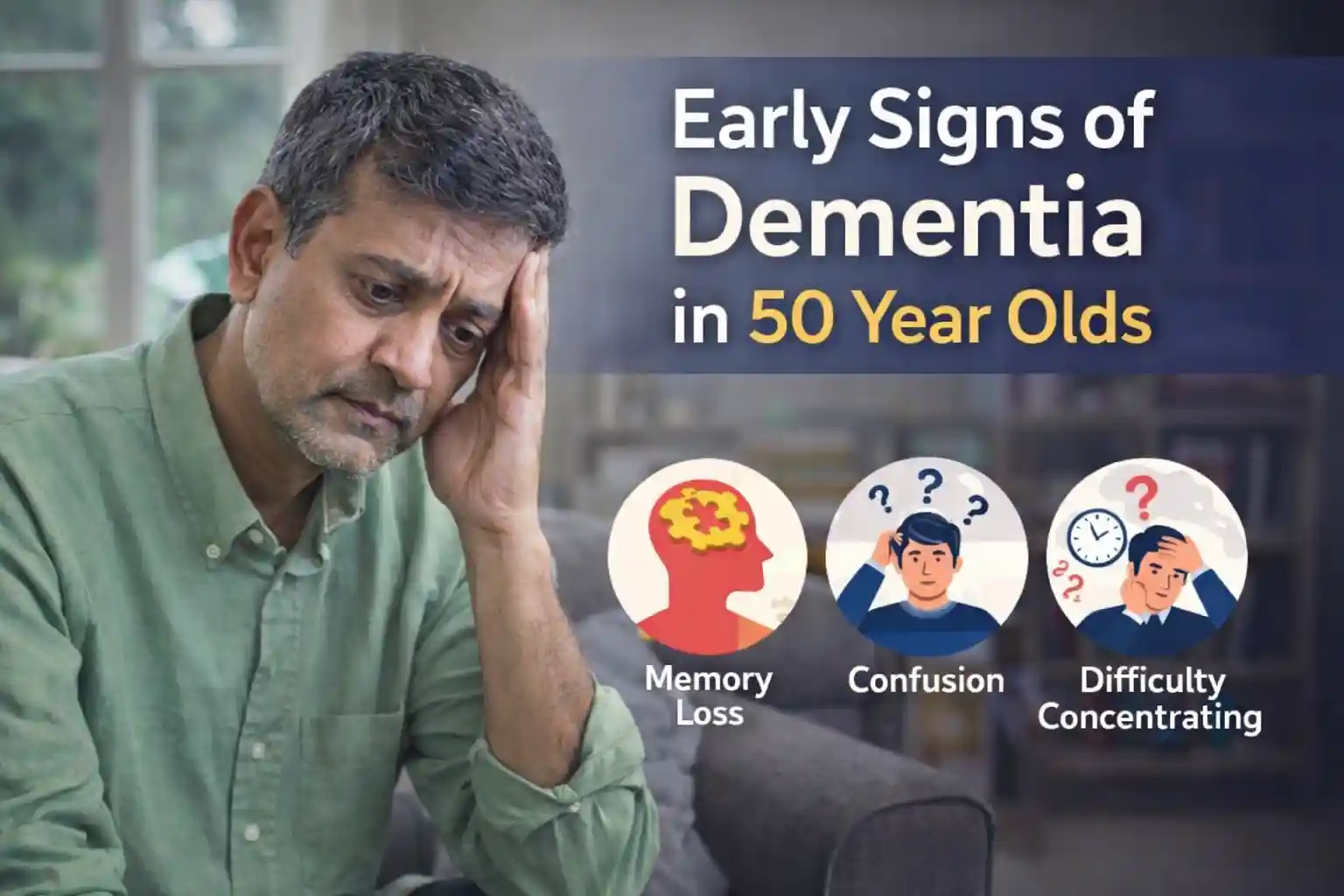
Early Signs of Dementia in 50 Year Olds: A Guide to Recognizing Symptoms and Taking Action
When we think of dementia, we often picture someone in their 80s. However, for many individuals, the journey begins much earlier. Developing dementia in your 50s—often referred to as Young-Onset Dementia (YOD)—presents unique challenges because this is a stage of life where you are likely at the peak of your career, managing a mortgage, or supporting children.
Identifying the symptoms early is not just about medical diagnosis; it is about reclaiming control over your future. This guide breaks down the subtle shifts in behavior, cognition, and physical ability that may indicate the onset of dementia in your 50s, followed by actionable solutions.

1. Why Early Detection in Your 50s is Different
In your 50s, “brain fog” is often dismissed as stress, menopause, or a mid-life crisis. Unlike late-onset dementia, which primarily affects memory, young-onset dementia often manifests first through personality changes or language difficulties.
Because the brain is still highly active at 50, it can “mask” symptoms for a while, making the eventual realization more sudden. Understanding the nuances of these early signs is the first step toward effective management.
2. Key Early Signs to Watch For
A. Subtle Cognitive Slips (Beyond “Where are my keys?”)
We all forget where we parked occasionally. However, dementia-related memory loss is different.
Retaining New Information: You might find yourself asking the same question three times in one conversation because the brain isn’t “saving” the data.
Sequential Logic: Difficulty following a well-known recipe or a multi-step DIY project you’ve done for years.
Time Disorientation: Losing track of the date or feeling confused about how you arrived at a certain location.
B. Language and Communication Struggles
In your 50s, you might notice “aphasia”—a clinical term for trouble with speech.
The “Tip of the Tongue” Phenomenon: Frequently forgetting simple words (e.g., calling a “watch” a “hand-clock”).
Losing the Thread: Stopping mid-sentence during a work meeting and having no idea what you were saying.
C. Executive Function Decline
This is often the first sign noticed in a professional setting.
Decision Fatigue: Making uncharacteristically poor financial decisions or struggling to manage a household budget that was once easy.
Losing Focus: An inability to concentrate on a book or a movie that requires following a complex plot.
D. Psychological and Mood Shifts
Dementia doesn’t just affect what you think; it affects how you feel.
Unexplained Apathy: Losing interest in hobbies, friends, or career goals that you were passionate about just months ago.
Social Withdrawal: Avoiding social gatherings because the effort to keep up with conversations feels overwhelming.
Heightened Irritability: Rapid mood swings or sudden bursts of anger over minor inconveniences.
3. Physical Indicators You Might Miss
While dementia is a brain disorder, the body often sends signals:
Loss of Balance: Frequent tripping or a subtle change in your gait (the way you walk).
Visual-Spatial Issues: Difficulty judging distances, which might lead to minor car “fender benders” or bumping into furniture.
Sense of Smell: Some studies suggest a declining sense of smell can be an early precursor to neurodegenerative changes.
4. Comparing "Normal Aging" vs. "Dementia"
| Symptom | Normal Aging (50s) | Early Sign of Dementia |
|---|---|---|
| Memory | Forgetting a name or appointment but remembering it later. | Forgetting recently learned info and not recalling it even with prompts. |
| Problem Solving | Making an occasional error on a monthly bill or calculation. | Inability to follow a familiar plan, recipe, or work with numbers. |
| Social Life | Sometimes feeling weary of work, family, or social obligations. | Complete withdrawal from hobbies, social activities, or work projects. |
| Judgment | Making a questionable or bad decision once in a while. | Frequent poor judgment (e.g., giving large sums of money to telemarketers). |
| Language | Sometimes struggling to find the "right" word. | Stopping mid-conversation and having no idea how to continue. |
5. Risk Factors: Why Now?
Early Signs of Dementia in 50 Year Olds or at 50, several factors contribute to the risk of dementia. While genetics (like the APOE-ε4 gene) play a role, lifestyle factors are equally significant:
Cardiovascular Health: High blood pressure and cholesterol can damage the small vessels in the brain (Vascular Dementia).
Sleep Apnea: Chronic lack of oxygen during sleep can accelerate cognitive decline.
Chronic Stress: High cortisol levels over decades can impact the hippocampus, the brain’s memory center.
6. Actionable Solutions: What to Do Right Now
If you or a loved one are experiencing these signs, do not panic. Transitioning from “worry” to “action” is the most powerful thing you can do.
Step 1: Secure a Clinical Evaluation
Do not rely on online quizzes. See a Neurologist or a Geriatric Psychiatrist. Ask for:
Cognitive Screening: Tests like the MoCA (Montreal Cognitive Assessment).
Blood Work: To rule out vitamin B12 deficiencies or thyroid issues, which can mimic dementia.
Brain Imaging: MRI or CT scans to look for physical changes in brain structure.
Step 2: The “Brain-First” Diet
The MIND Diet (a hybrid of Mediterranean and DASH) has shown significant success in slowing cognitive decline.
Action: Increase intake of leafy greens, berries, nuts, and fatty fish (Omega-3s). Reduce processed sugars and red meats.
Step 3: Cognitive Reserve Building
Think of your brain like a muscle.
Action: Learn a new language, take up a musical instrument, or engage in complex strategy games. This builds “synaptic density,” helping the brain bypass damaged areas.
Step 4: Physical Movement
Aerobic exercise increases BDNF (Brain-Derived Neurotrophic Factor), which is essentially “Miracle-Gro” for your brain cells.
Action: Aim for 150 minutes of moderate-intensity exercise per week (brisk walking, swimming, or cycling).
Step 5: Prioritize Sleep and Stress Management
Sleep is when your brain’s “glymphatic system” flushes out toxins (amyloid plaques).
Action: Establish a strict sleep hygiene routine. Practice mindfulness or meditation to lower neuroinflammation caused by stress.
7. Expert Perspective: The Power of Early Intervention
Medical science is evolving rapidly. We are moving toward a world where dementia is managed as a chronic condition rather than a terminal diagnosis. Early detection in your 50s allows you to:
Participate in clinical trials for new disease-modifying drugs.
Make legal and financial arrangements while you have full capacity.
Implement lifestyle changes that can potentially add years of high-quality cognitive function.
Conclusion
Noticing early signs of dementia in your 50s is frightening, but silence is your worst enemy. By recognizing the subtle shifts in memory, personality, and logic today, you open the door to treatments and lifestyle adjustments that can significantly alter the trajectory of the condition.
You are not alone in this journey. Modern medicine and supportive communities are available to help you navigate these changes with dignity and hope.
Dementia Prevention Strategies: Your Evidence-Based Guide to Lasting Brain Health
If you are concerned about memory loss or have a family history of cognitive decline, you are likely asking: “Is dementia inevitable, or can I stop it?” While genetics play a role, the latest medical research brings incredible news. According to the Lancet Commission, nearly 45% of dementia cases could be prevented or delayed by managing specific lifestyle factors. This means you have significant power over your brain’s future.
This guide moves beyond generic advice to provide a strategic, actionable plan for dementia prevention, focusing on what you can control today.
1. The Power of “Numbers”: Managing Metabolic Health
Your brain is a high-energy organ that relies on a steady, clean supply of blood. What is good for your heart is almost always good for your head.
Control Your Blood Pressure
Hypertension (high blood pressure) in your 40s and 50s is one of the strongest predictors of dementia later in life.
The Strategy: Aim for a systolic blood pressure of 130 mm Hg or lower. High pressure damages the tiny blood vessels in the brain, leading to “silent” mini-strokes that cause vascular dementia.
Target “Bad” Cholesterol (LDL)
Recent 2024 studies have identified high LDL cholesterol in midlife as a major modifiable risk factor.
The Strategy: Monitor your LDL levels. Excess cholesterol contributes to the buildup of amyloid plaques, the sticky proteins associated with Alzheimer’s disease.
2. Sensory Health: The “Use It or Lose It” Rule
A surprising but vital prevention strategy involves your ears and eyes. When your brain stops receiving clear sensory input, it has to work harder to “fill in the gaps,” which drains cognitive reserve.
Treat Hearing Loss Early
Hearing impairment is linked to a significantly higher risk of cognitive decline.
The Strategy: If you find yourself asking people to repeat themselves, get a hearing test. Using hearing aids doesn’t just help you hear; it keeps your brain’s auditory cortex active and engaged.
Correct Your Vision
Untreated vision loss is now recognized as a key risk factor.
The Strategy: Ensure your prescription is up to date. Clear vision allows you to navigate the world safely and stay socially engaged.
3. The “Brain-Body” Connection: Physical Activity
Exercise is the closest thing we have to a “miracle drug” for the brain.
Aerobic Power: Activities like brisk walking, swimming, or cycling increase blood flow to the hippocampus—the brain’s memory center.
Strength Training: Lifting weights or using resistance bands helps manage blood sugar and reduces systemic inflammation.
The Strategy: Aim for 150 minutes of moderate activity per week. Even a 20-minute daily walk can stimulate the production of BDNF (Brain-Derived Neurotrophic Factor), a protein that grows and repairs brain cells.
4. Fueling the Mind: The MIND Diet
Nutrition is your brain’s primary defense system. The MIND Diet (a combination of Mediterranean and DASH diets) is specifically designed to prevent neurodegeneration.
What to Eat: Leafy greens (spinach, kale), berries (blueberries are “brain gold”), nuts, olive oil, and fatty fish (salmon, sardines).
What to Limit: Processed sugars, red meat, and fried foods.
The Strategy: Replace butter with olive oil and snack on walnuts instead of chips. These small swaps reduce the oxidative stress that “rusts” your brain cells over time.
5. Cognitive and Social Resilience
Building a “Cognitive Reserve” is like putting money in a mental bank account. The more you have, the more your brain can withstand age-related changes.
Lifelong Learning
Don’t just do the same crossword puzzles every day. Your brain needs novelty.
The Strategy: Learn a new language, take up a musical instrument, or master a new software. Challenging your brain creates new neural pathways.
Social Connectivity
Loneliness is as damaging to the brain as smoking 15 cigarettes a day.
The Strategy: Join a club, volunteer, or schedule weekly coffee dates. Meaningful social interaction requires complex cognitive processing that keeps your mind sharp.
6. Sleep: The Brain’s “Cleaning Service”
While you sleep, your brain’s glymphatic system goes to work, flushing out metabolic waste and toxins that build up during the day.
The Danger of Apnea: If you snore or stop breathing during sleep, your brain is deprived of oxygen, which drastically increases dementia risk.
The Strategy: Prioritize 7–9 hours of quality sleep. If you feel tired after a full night’s rest, consult a doctor for a sleep study.
Conclusion: Start Your Prevention Journey Today
Dementia prevention isn’t about one “magic pill”—it’s about a lifestyle of cumulative wins. By controlling your blood pressure, staying physically active, and keeping your social life vibrant, you are actively building a brain that can last a lifetime.
The best time to start was ten years ago; the second best time is today.
Comparison Table: Modifiable vs. Non-Modifiable Risks
| Category | Risk Factor | Action You Can Take |
|---|---|---|
| Modifiable | Blood Pressure | Monitor and keep under 130/80 mm Hg through diet and exercise. |
| Modifiable | Hearing Loss | Use hearing aids early to keep the auditory cortex stimulated. |
| Modifiable | Physical Activity | Aim for 150 min/week of brisk walking or aerobic activity. |
| Non-Modifiable | Age | Focus on healthy aging habits to delay symptoms. |
| Non-Modifiable | Genetics | Use aggressive lifestyle changes to "offset" genetic risks (APOE-ε4). |
“When home care becomes overwhelming, it’s important to remember that professional support is an act of love, not abandonment. If you are struggling to manage safety at home, you might want to look into reputable Old Age Homes in Kolkata that specialize in senior wellness and cognitive support.”
Frequently Asked Questions (FAQ)
1. Is it normal to have memory loss at 50?
While some forgetfulness can be a part of normal aging or high stress, frequent memory loss that interferes with daily life—such as forgetting common words or getting lost in familiar places—is not normal. At 50, these are often the first red flags of cognitive decline.
2. What is the very first sign of dementia in middle age?
The earliest sign isn’t always memory loss. In many 50-year-olds, the first signs are subtle personality changes, loss of motivation (apathy), or difficulty multitasking at work. If a person suddenly struggles with complex tasks they once mastered, it warrants an evaluation.
3. Can stress mimic dementia symptoms in your 50s?
Yes, chronic stress, severe anxiety, and lack of sleep can cause “brain fog” that looks like dementia. However, dementia is progressive. If the symptoms persist even after resting or reducing stress, it is likely a neurological issue rather than just burnout.
4. How is young-onset dementia diagnosed?
Doctors use a combination of cognitive tests (like the MoCA test), blood work to rule out vitamin deficiencies, and brain imaging (MRI or CT scans) to check for brain shrinkage or vascular changes.
5. Can you prevent dementia if you start at age 50?
Absolutely. Research shows that managing blood pressure, staying socially active, and following the MIND diet can significantly delay or even prevent the onset of symptoms. Early lifestyle intervention is the most powerful tool we have.

M.A.(Hons) in Geography at University of Calcutta.
writing-specific social work courses such as interviewing and documentation,
professional seminars, and writing modules in all BSW and MSW