Affordable Old Age Home with Medical Support in Kolkata – 2026 Budget Guide
Published: May 2026 | Reading time: 8 minutes
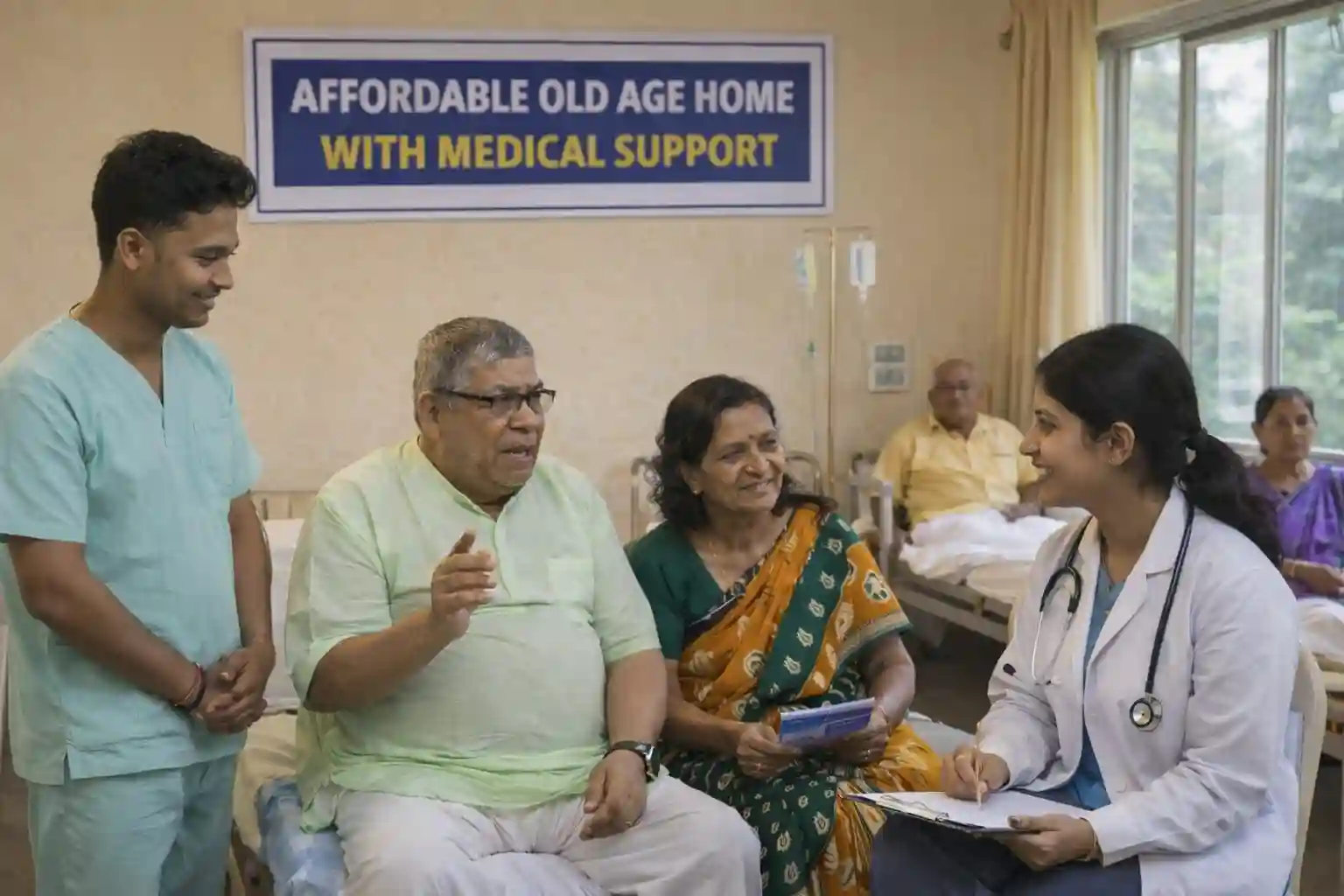
Finding a safe, clean, and well‑managed old age home that fits a tight budget is not easy – but it is possible. Many Kolkata families need a place where their senior members receive basic medical care (medication reminders, BP checks, a visiting doctor) without paying luxury prices.
This guide is for you if:
- Your loved one is mobile or needs light assistance (no severe dementia or aggression)
- Your monthly budget is ₹12,000 – ₹25,000 (not ₹50,000+)
- You still want on‑site medical support – a nurse, a doctor on call, and emergency readiness
If your family member has diagnosed dementia, memory loss that causes wandering, or behavioural issues, a budget home is not safe. Please see our specialised page: Old Age Home for Dementia Care in Kolkata. This guide is for general, affordable senior care without memory‑specific needs.
What Does “Affordable Old Age Home with Medical Support” Mean in Kolkata (2026)?
Many homes claim to be affordable, but “affordable” is vague. Let’s define it with real numbers.
| Cost component | Budget range (2026) |
|---|---|
| Monthly fee (shared room, basic care) | ₹12,000 – ₹18,000 |
| Monthly fee (private non‑AC room) | ₹18,000 – ₹25,000 |
| Refundable deposit | ₹25,000 – ₹60,000 |
| Extra for medical/nursing support | Often included or +₹1,000 – ₹3,000 |
At this price point, medical support typically means:
- A resident nurse on duty during day (8‑10 hours)
- Visiting doctor 2‑3 times per week
- Basic first aid and oxygen cylinder available
- Tie‑up with a nearby hospital for emergencies
- Daily medication reminders and logging
You will not get 24/7 registered nurse, physiotherapy, or memory care at this budget. That is fine – for seniors without complex conditions, this is enough.
Where to Find Affordable Homes with Medical Support in Kolkata
Avoid the “luxury retirement community” tag if your budget is tight. Instead, look in these areas:
1. South Kolkata (Behala, Joka, Thakurpukur, Tollygunge fringe)
Several small (10‑20 bed) homes run by charitable trusts or small entrepreneurs.
- Typical cost: ₹12,000 – ₹18,000 shared, ₹20,000 – ₹25,000 private.
- Medical tie‑ups: Often with local nursing homes (e.g., Behala Nursing Home, Joka Hospital).
- Tip: Visit after 5 PM – many low‑cost homes reduce night staff drastically. Ask specifically about night presence.
2. North Kolkata (Shyambazar, Dum Dum, Baranagar, Sinthee)
Older, established homes in converted residential buildings.
- Typical cost: ₹10,000 – ₹16,000 (shared), ₹15,000 – ₹22,000 (private).
- Medical support: Usually a visiting doctor (once a week) and a helper who gives medicines. No full‑time nurse – be cautious.
- Red flag: If they say “we have a nurse on call”, that means no nurse on premises.
3. East Kolkata & Salt Lake periphery (Kestopur, Baguiati, New Town outskirts)
Newer homes but prices rising. Budget options exist away from central Salt Lake.
- Typical cost: ₹15,000 – ₹22,000 (shared non‑AC), deposit higher (₹50,000 – ₹80,000).
- Medical support: Better – some have retired nurses living on site. Ask for the nurse’s shift timing.
4. Howrah & North 24 Parganas (within commuting distance)
If you are willing to stay slightly outside Kolkata, prices drop. Areas: Liluah, Bally, Belur (Howrah); Barasat, Madhyamgram (North 24 Parganas).
- Cost: ₹9,000 – ₹15,000 monthly.
- Medical support: Basic – visiting doctor 2 times/week, helper‑led medication.
- Trade‑off: Travel time for family visits. Worth it if budget is very tight.
Practical Checklist: How to Verify Medical Support on a Budget
Don’t trust brochures. Use this checklist during your visit:
✅ Medical facilities (must have)
- Is there a dedicated medical corner/room with a bed, BP apparatus, stethoscope, first aid, oxygen cylinder?
- Are medicines stored in a locked cupboard, labelled by resident name?
- Is there a log book of daily health checks (BP, sugar, temperature) for residents?
- Ask: “Who gives medicines at night?” If answer is “the night helper”, check if that helper has basic first aid training.
✅ Emergency readiness
- Do they have a tie‑up with a nearby hospital? Ask for the hospital name and phone number. Call them to verify.
- Is there an ambulance contact on the wall? A real number, not a generic “we will call 108”.
- Ask: “What happened the last time a resident had a fall at 10 PM?” A clear, honest story is a good sign.
✅ Staff (realistic for budget homes)
- Day shift: at least one trained caregiver for every 8 residents.
- Night shift: at least one person awake (not necessarily nurse, but must know how to call ambulance and give basic aid).
- Visiting doctor’s schedule – written and displayed.
✅ Legal & fees (protect yourself)
- Ask for a copy of their local trade license – at minimum.
- Get a written fee breakdown: monthly rent, deposit, medical charges, any extra (electricity for AC, laundry beyond limit, etc.).
- Notice period to vacate – standard is 30 days. Avoid homes demanding 3 months.
Cost Examples from Real Kolkata Homes (2026 Survey)
These are approximate real ranges from budget medical‑support homes (names withheld for neutrality):
| Location | Room type | Monthly fee (incl. medical support) | Deposit | Night nurse? |
|---|---|---|---|---|
| Behala | Shared (3 beds) | ₹13,000 | ₹30,000 | No (helper present) |
| Dum Dum | Private non‑AC | ₹18,000 | ₹40,000 | No (on‑call only) |
| Kestopur | Private non‑AC | ₹22,000 | ₹60,000 | Yes (8pm‑6am) |
| Barasat | Shared | ₹10,000 | ₹25,000 | No |
| Liluah (Howrah) | Private non‑AC | ₹15,000 | ₹35,000 | No (neighbour hospital 1 km) |
Notice: Homes with a dedicated night nurse cost ₹20,000+ in Kolkata. For under ₹15,000, you will not get 24/7 nursing – only day support. That is acceptable if your parent is stable.
Hidden Costs That Destroy “Affordability”
Ask about these before signing. Many families get shocked later.
| Hidden cost | Typical amount | How to avoid |
|---|---|---|
| Electricity for AC / heater | ₹2,000 – ₹5,000/month extra | Choose non‑AC room or ask for meter reading |
| Laundry beyond 4 pieces/day | ₹5 – ₹10 per extra piece | Send clothes home weekly |
| Escort to doctor (outside) | ₹500 – ₹1,000 per trip | Take them yourself if possible |
| Special diet (diabetic, soft food) | ₹1,000 – ₹2,000/month | Negotiate to include in base fee |
| Diapers / incontinence supplies | ₹1,500 – ₹3,000/month | Buy your own cheaper online |
Get every extra charge listed in the agreement – verbal promises are worthless.
When an Affordable Home Is NOT Safe – Please Read Carefully
A low‑cost home with basic medical support is only safe for seniors who:
- Can walk (with or without a stick)
- Follow simple instructions (“please eat”, “please sit”)
- Do not wander at night or try to leave the premises
- Do not have aggression, screaming, or dangerous confusion
- Have no severe medical instability (recent heart attack, uncontrolled diabetes)
If your loved one shows any of the following, do NOT admit them to a budget home – they will be neglected or harmed:
- Wanders outside or tries to climb over railings
- Becomes physically aggressive with staff or other residents
- Forgets to eat or drink for days
- Cannot communicate basic pain or need for toilet
- Has had multiple falls or hospitalisations in the past 3 months
For such cases, you need a specialised dementia care home with trained staff, secured exits, and 24/7 behavioural management. That costs more – but it is non‑negotiable for safety. See: Old Age Home for Dementia Care in Kolkata.
Frequently Asked Questions (FAQ) – Affordable Medical‑Support Homes
No. ₹10,000 will give you a roof, food, and a helper who reminds medicines. A trained nurse costs at least ₹15,000 – ₹18,000 per month in salary alone. Be realistic.
₹25,000 – ₹40,000 for budget homes. Some ask ₹50,000+ – negotiate or avoid if it strains your finances.
Yes, e.g., Nabajatak Old Age Home (Kolkata) and several under the West Bengal Social Welfare Board. However, waiting lists are extremely long (1‑2 years), and medical support is minimal. Private budget homes are more accessible.
Ask for a trade license from the local municipality (KMC, Bidhannagar, etc.). If they refuse or say “we are registered as a charitable trust”, ask for the trust registration certificate. Avoid unlicensed places – they get raided and closed.
30 days. Some ask for 60 days. Read the agreement. Also check if the deposit is fully refundable – many deduct “maintenance charges” unfairly.
Usually yes, but they may charge extra electricity. Ask upfront.
No – physiotherapy is a premium service. You will need to arrange a private physiotherapist who visits (cost ₹500 – ₹1,000 per session). The home may allow them to come.
Final Advice for Kolkata Families on a Budget
- Be honest about your parent’s condition. A budget home is not a hospital or dementia facility. If they need constant monitoring, save up for a better place.
- Visit at night. Many affordable homes look great at 11 AM but are deserted at 10 PM. Go unannounced between 8‑9 PM.
- Talk to other families – ask the home for 2‑3 references. Call them and ask specifically: “Does the night staff actually stay awake?”
- Start with a trial – pay for 1 month as a “trial period” before committing a large deposit.
- Keep a backup plan – if the home fails, where will you shift your parent in 2 days? Know a second option.
Affordable does not mean bad. There are honest, small homes run by kind people. But you must inspect thoroughly.
For families who need specialised dementia care (memory loss, wandering, aggression), affordable homes are dangerous. Please use our dedicated service: Old Age Home for Dementia Care in Kolkata.
Share This Guide – If this helped you, share it with another Kolkata family looking for an affordable, safe old age home.
🏡 Need a Verified Affordable Old Age Home in Kolkata?
Compare budget options, medical support details, and family reviews – all in one place.
Explore Affordable Old Age Homes →