Best Food in Senior Living – 2026 Guide to Nutritious, Delicious Meals for Elderly
Published: May 2026 | Reading time: 7 minutes
Good food is more than calories – it is comfort, health, and joy. In senior living communities (independent living, assisted living, or nursing homes), meals must be safe, appetising, and tailored to changing health needs. This guide describes the best food practices in senior living – from texture‑modified diets and chronic disease management to social dining and hydration. Whether you are choosing a community for a parent or improving your own senior years, these principles ensure meals support both physical health and emotional well‑being.
This is a general nutritional guide. If your loved one has dementia or Alzheimer’s and requires specialised memory care, please see our dedicated resource at the end.
1. What Makes Food “Best” for Seniors?
The best senior living food is:
- Safe – No choking hazards, proper temperature, allergy aware.
- Nutritious – High protein, fibre, vitamins; low sugar, salt, unhealthy fats.
- Easy to chew and swallow – Soft, minced, pureed, or thickened liquids as needed.
- Appetising – Good colour, aroma, flavour – not bland “hospital food”.
- Social – Served in a pleasant dining room with companionship.
- Customisable – Accommodates diabetic, low‑sodium, renal, Jain, vegetarian, or non‑vegetarian preferences.
2. Core Principles of Senior Dining (2026)
🥗 Texture‑Modified Diets
Many seniors have dysphagia (swallowing difficulty) or dental issues. The International Dysphagia Diet Standardisation Initiative (IDDSI) levels are used:
| Level | Description | Example Foods |
|---|---|---|
| 7 – Regular | Easy-to-chew regular foods | Soft cooked vegetables, ground meat, flaky fish |
| 6 – Soft & Bite-sized | Soft, moist, no hard pieces | Mashed potatoes, soft scrambled eggs, baked beans |
| 5 – Minced & Moist | Finely minced, no lumps | Minced chicken in gravy, pureed vegetables, porridge |
| 4 – Pureed | Smooth, no chewing required | Smooth soups, yoghurt, pudding, pureed dal |
Best practice: Menus should clearly label texture levels. Staff should be trained to modify meals for individual needs.
🩺 Disease‑Specific Menus
- Diabetic – Low glycemic index (millets, brown rice), no added sugar, controlled portions.
- Low‑sodium – Fresh herbs instead of salt, no pickles or processed meats.
- Renal (kidney) – Controlled protein, potassium, and phosphorus. Avoid bananas, potatoes, dairy.
- Low‑fat / cardiac – Steamed, baked, or grilled; limited saturated fat and cholesterol.
- Soft/pureed – For those with chewing or swallowing problems.
💧 Hydration – Often Overlooked
Dehydration is a common cause of hospitalisation. Best senior living communities:
- Offer water, buttermilk, herbal tea, and juicy fruits at every meal.
- Have beverage stations accessible between meals.
- Monitor intake for residents at risk (e.g., those on diuretics).
- Serve soups, custards, and water‑rich vegetables (cucumber, zucchini).
3. Best Foods to Include Regularly
🍳 Breakfast
High‑protein options – Scrambled eggs, Greek yogurt, paneer, nut butter on soft bread.
Whole grains – Oatmeal, millet porridge, multigrain or whole wheat bread.
Fruits – Berries, papaya, banana (in moderation), stewed apples.
🍲 Lunch & Dinner
Lean proteins – Fish (rohu, salmon), skinless chicken, lentils (dal), tofu, paneer.
Vegetables – Leafy greens (spinach, mustard), cauliflower, carrots, pumpkin – cooked soft.
Starches – Brown rice, millet (ragi, jowar), quinoa, sweet potato, or well‑cooked pasta.
Healthy fats – Cold‑pressed oils, ghee (small amount), avocado, nuts (ground if choking risk).
🍎 Snacks
Fresh fruit (cut into safe sizes), yoghurt or cottage cheese, hummus with soft vegetable sticks, steamed idli or dhokla, smoothies (protein or fruit, thickened if needed).
4. Foods to Avoid or Limit
| Food | Why |
|---|---|
| Hard, round, or sticky items | Popcorn, nuts (whole), hard candies, raw carrots – choking hazards |
| Excess salt | Pickles, papad, processed meats, canned soups – raise blood pressure |
| Added sugar | Sweets, pastries, sweetened drinks – worsen diabetes, obesity |
| Dry, crumbly foods | Dry crackers, toast, dry cakes – difficult to swallow |
| Very hot or very cold | May cause burns or sensitivity; serve warm or room temperature |
5. The Social Aspect of Dining – Why It Matters
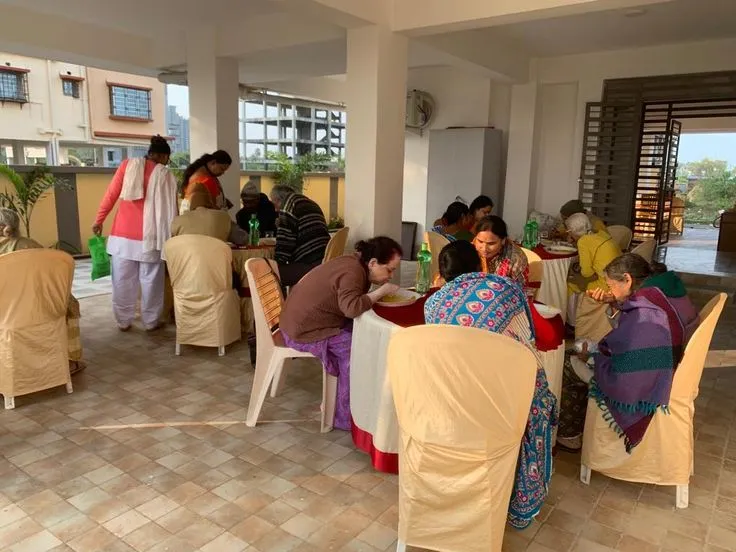
Best food tastes better when shared. Senior living communities should:
- Create a pleasant dining environment – Good lighting, comfortable chairs, tablecloths, background music.
- Offer flexible dining hours – Not rigid “only 12‑1 PM” – seniors may have different appetites.
- Encourage family meals – Allow visiting family to dine with resident (for a small fee).
- Celebrate festivals – Special meals for Durga Puja, Diwali, Christmas, Eid – brings joy.
- Provide quiet spaces – For seniors with dementia who get overstimulated by noise.
Research 2026: Seniors who eat in a group setting consume 20‑30% more calories and report higher life satisfaction than those who eat alone in their rooms.
6. Special Considerations for Dementia Residents
Seniors with Alzheimer’s or other dementias have unique dining challenges:
- May forget to eat – Offer small, frequent meals and hand‑held finger foods.
- May refuse food – High‑calorie, nutrient‑dense smoothies and milkshakes can supplement.
- May have swallowing issues – Pureed or minced meals with thickened liquids.
- May be distracted – Use plain white plates (patterns confuse), serve one item at a time.
- May wander during meals – Secure dining area with supervision.
For specialised dementia care with trained dietary staff, please visit our dedicated memory care facility:
👉 Old age home in Kolkata for dementia care
7. How to Evaluate a Senior Living Community’s Food – Checklist for Families
When visiting potential communities:
- Taste a meal – Eat lunch or dinner unannounced (pay for it). Is it flavourful? Proper temperature?
- Ask about texture modifications – Can they puree or mince on request? Extra charge?
- See a sample menu – Is it seasonal, varied, and labelled for dietary needs?
- Watch staff behaviour – Do they help residents gently? Rushing leads to choking or spills.
- Check the kitchen – Is it clean? Are raw and cooked foods separated?
- Speak to current residents – “Do you like the food? Do you have choices?”
Red flags: Food looks unappetising, only one menu for all (no alternatives), staff impatient, residents leaving large portions uneaten.
Frequently Asked Questions (FAQ) – Senior Living Food
Yes – good communities accommodate religious and medical diets without extra charge. Ask before admission.
First, check if the food is too bland or too spicy. Ask for alternatives. If refusal persists, a small fridge in the room for familiar items (yoghurt, fruit) may help. For dementia, consult a doctor – it may be illness or depression.
Yes, if vegetables are washed thoroughly and the resident has no immune suppression. For those with swallowing difficulty, cooked vegetables are safer.
About 1‑1.2 grams per kilogram of body weight. For a 60 kg senior, that is 60‑72 grams of protein – roughly 2 eggs, a bowl of dal, and a serving of fish or paneer.
Some communities stock them at an extra cost. In specialised dementia or skilled nursing units, they are often included.
Most communities allow it, but ask that it be consumed promptly and not shared (allergy risks). Avoid extremely hot or cold items.
Monitor weight monthly. If weight declines, ask the dietician to increase calorie density (add ghee, cream, nut butter) and offer nutrient‑dense shakes.
Final Advice – Food Is Part of Care
The best food in senior living is not about Michelin stars. It is about safety, nutrition, dignity, and enjoyment. When choosing a community, taste the food, watch meal times, and ask about customisation. A facility that takes food seriously is likely to take all care seriously.
For families needing specialised dementia care and dietary management in Kolkata, explore our dedicated memory care facility:
👉 Old age home in Kolkata for dementia care
🍽️ Discover Senior Living with Outstanding Food & Compassionate Care
We offer nutritious, personalised meals in a warm dining environment – plus specialised memory care for those who need it.
Contact Shibasram Trust →