Hypertension and BP Monitoring for Elderly Residents – 2026 Guide for Families and Senior Care Facilities
Hypertension, or high blood pressure, affects nearly half of Indian adults, with prevalence rising sharply with age. For seniors living in old age homes, assisted living facilities, or retirement communities, managing blood pressure is not just about avoiding heart attacks and strokes—it is about preserving cognitive function, preventing falls, and maintaining quality of life. This guide provides evidence‑based practices for hypertension management and blood pressure monitoring tailored to elderly residents in 2026, with practical checklists for families and facility staff.
1. Why Hypertension Hurts More as We Age
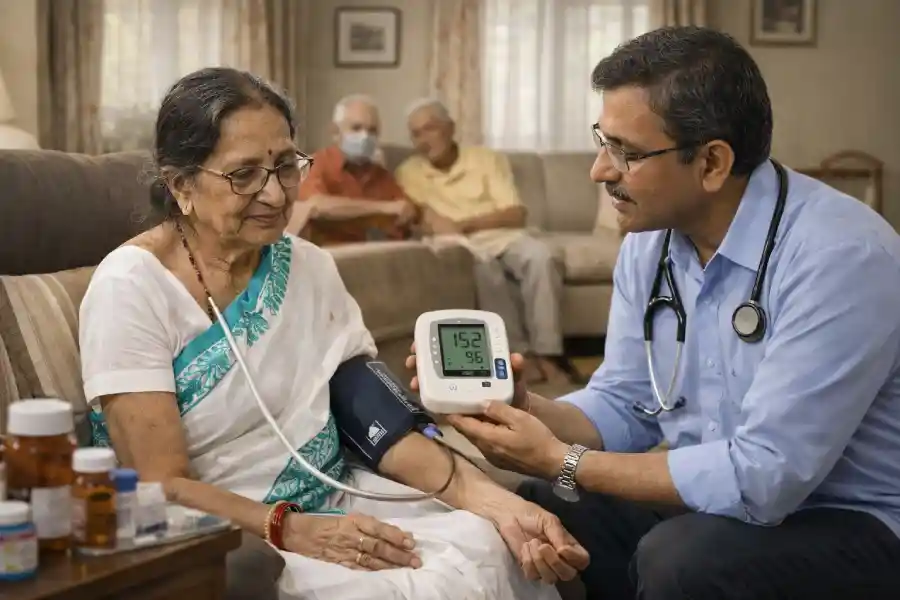
High blood pressure is called the “silent killer” because it rarely causes symptoms—until it is too late. For seniors, untreated hypertension damages small blood vessels in the brain, kidneys, eyes, and heart. Over time, this leads to strokes, heart attacks, kidney failure, vision loss, and accelerated cognitive decline.
2. 2026 Blood Pressure Targets for Seniors: New Guidelines
| Population | Target BP (Systolic/Diastolic) |
|---|---|
| Most adults aged 65+ | < 130/80 mmHg |
| Frail seniors or those with multiple falls risk | < 140/90 mmHg (individualised) |
| Patients at high cardiovascular risk | < 120/80 mmHg (if tolerated) |
The 2026 update: For ambulatory seniors aged 65+, a target of 130/80 mmHg reduces heart attacks, strokes, and kidney failure compared to older 140/90 targets. However, treatment should always be individualised based on frailty, fall history, diabetes, and kidney disease.
3. Recognising Hypertension in the Elderly – What to Watch For
Because hypertension is often asymptomatic, regular monitoring is the only reliable detection method. However, when blood pressure climbs dangerously high, seniors may experience: severe headache, fatigue or confusion, dizziness, chest pain, shortness of breath, or nosebleeds (rare).
4. Best Practices for Home‑Based Blood Pressure Monitoring
5. Lifestyle Management – The First Line of Defence
- 🧂 Reduce Sodium – Limit to <5g salt/day. Avoid pickles, papad, namkeens, processed foods. Use herbs, spices, lemon.
- 🚶♂️ Increase Physical Activity – Daily walking 30 min, seated exercises, chair yoga, tai chi.
- ⚖️ Maintain Healthy Weight – Weight loss of 5‑10% reduces systolic BP by 5‑20 mmHg.
- 🛌 Optimise Sleep and Stress – 7‑8 hours sleep. Meditation, music therapy, social engagement.
- 🚫 Avoid Addictive Substances – Smoking cessation, limit alcohol.
6. Medication Management – Overcoming Non‑Adherence
Nearly half of patients discontinue antihypertensive medication within the first year. In senior care settings, facilities must implement systems for consistent medication delivery.
7. Hypertension Management in Senior Living Facilities – What Families Should Ask
- How often are residents’ BP checked? (Daily/weekly schedule)
- Who performs measurements and records them? (Trained nurse/caregiver)
- Is there a remote patient monitoring (RPM) system?
- How are abnormal readings escalated to a doctor? Within what timeframe?
- How is medication adherence ensured? (Pill organisers, blister packs, observed therapy)
- Does the facility offer low‑sodium, heart‑healthy meals?
- Are there daily walking or exercise programmes?
- What is the emergency protocol for BP > 180/120?
Red flags: No written BP log, staff unable to use cuff properly, no access to consulting doctor for medication adjustments.
8. Hypertension and Cognitive Decline – Why BP Control Protects the Brain
9. Cost of BP Monitoring and Care in Kolkata (2026)
| Item / Service | Approximate Cost (₹) |
|---|---|
| Digital BP monitor (basic home use) | 1,000 – 3,000 |
| Digital BP monitor (cellular RPM device) | 5,000 – 15,000 |
| Monthly subscription for RPM service | 500 – 1,500 |
| Home‑based nursing visit for BP check | 500 – 1,000 per visit |
| Monthly facility fee (includes BP monitoring in premium homes) | 30,000 – 65,000 |
Government schemes like the West Bengal Health Scheme (WBHS) provide cashless medical treatment benefits up to ₹2 lakh for eligible state government pensioners, covering hospitalisation for hypertensive complications. Always check eligibility.
10. When Hypertension Management Requires Memory Care
For seniors with advanced dementia, medication adherence, BP monitoring, and lifestyle interventions become extremely difficult. If your loved one's facility cannot provide consistent monitoring or if cognitive decline leads to wandering, aggression, or unsafe behaviours, a specialised memory care unit with integrated hypertension management may be the appropriate next step.
If your loved one has dementia or Alzheimer’s and requires specialised residential memory care, please visit our dedicated facility in Kolkata:
👉 Old age home in Kolkata for dementia care →
❓ Frequently Asked Questions (FAQ)
Hypertension is a chronic condition, not an occasional concern. For elderly residents in care settings, consistent monitoring, medication adherence, low‑sodium meals, and daily movement transform outcomes. Families should insist on a written hypertension management protocol. When cognitive decline and hypertension coexist, controlling BP is one of the most powerful ways to preserve brain function.
For families in Kolkata who need specialised dementia care with comprehensive medical management, explore our memory care home:
👉 Old age home in Kolkata for dementia care →