Post Hospital Care for Senior Citizens in Kolkata – 2026 Family Guide
Published: May 2026 | Reading time: 7 minutes
Leaving the hospital after a serious illness, surgery, or stroke is a relief – but it is not the end of the journey. For senior citizens, the days and weeks after discharge are critical. Without proper post‑hospital care, complications like infections, falls, medication errors, and readmissions are common. This guide explains the post‑hospital care options in Kolkata (2026), how to choose the right service, and when long‑term residential care becomes necessary.
This is an informational guide about short‑term rehabilitation and recovery. If your loved one needs long‑term memory care for dementia or Alzheimer’s, please see our dedicated resource at the end.
1. Why Post‑Hospital Care Matters for Seniors
After a hospital stay, seniors are often weak, confused (especially after anaesthesia or a stroke), and at high risk of:
- Falls – due to muscle weakness or medication side effects.
- Infections – urinary tract infections, pneumonia, wound infections.
- Medication mistakes – new prescriptions can be confusing.
- Malnutrition and dehydration – poor appetite or forgetting to eat.
- Readmission – up to 20% of seniors return to hospital within 30 days without proper follow‑up.
Structured post‑hospital care bridges the gap between hospital and home, reducing complications and speeding recovery.
2. Types of Post‑Hospital Care Available in Kolkata (2026)
🏡 Home‑Based Post‑Hospital Care
What it is: Trained nurses, physiotherapists, or caregivers come to the senior’s home.
Services include: wound dressing, catheter care, tube feeding management, medication administration, physiotherapy, daily vital monitoring, personal care as needed.
Cost: ₹15,000 – ₹35,000/month (depending on hours and nurse involvement).
Best for: Seniors who have family support at home and a safe, accessible home environment.
🏥 Residential Post‑Hospital Care (Step‑down / Transitional Care)
What it is: Short‑term stay (1‑4 weeks) in a skilled nursing facility or rehabilitation centre. The senior receives 24/7 nursing and therapy before returning home.
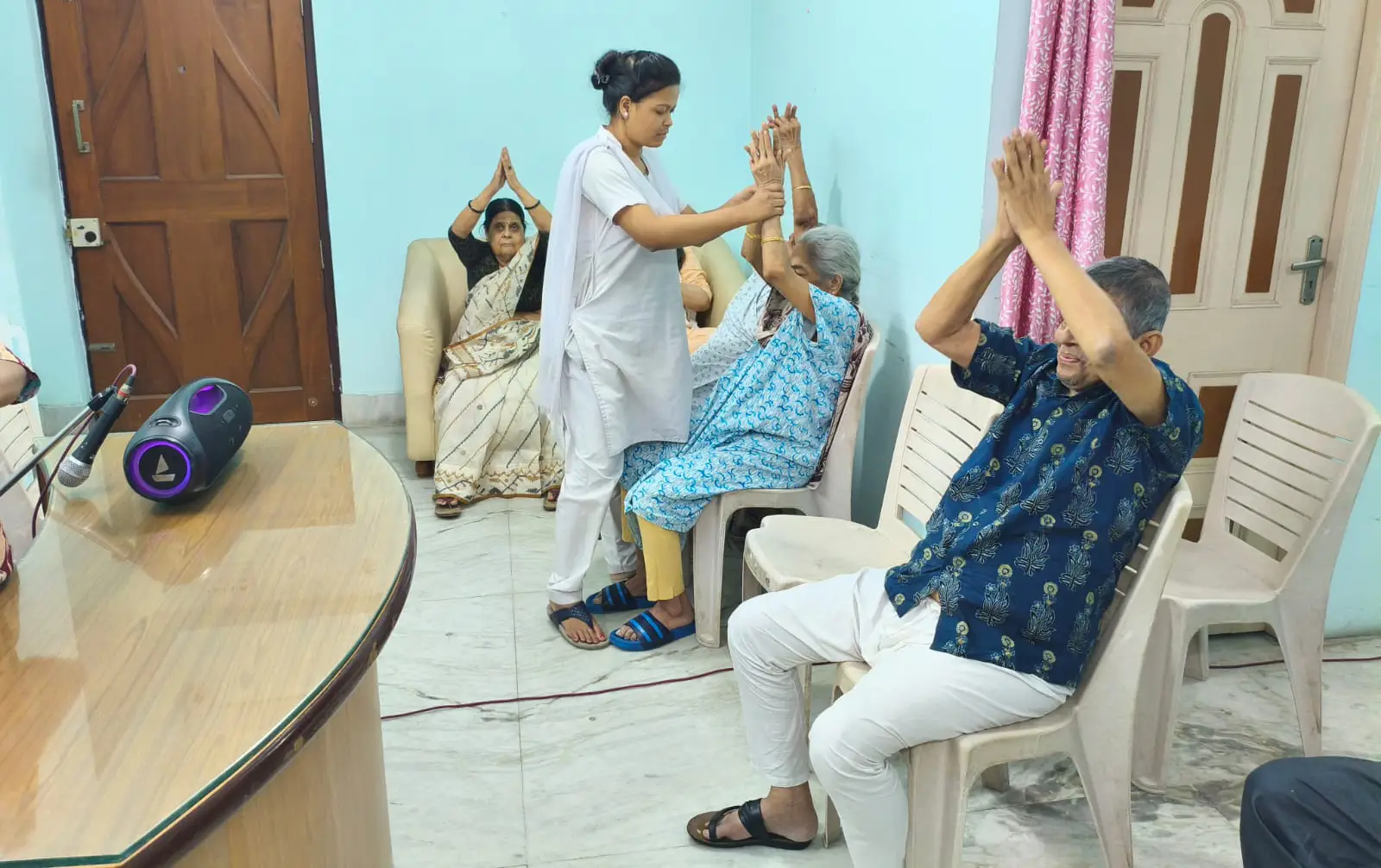
Services include: 24/7 registered nurses, daily physiotherapy and occupational therapy, doctor visits 2‑3 times/week, oxygen, suction, emergency backup, nutritious meals tailored to recovery.
Cost: ₹40,000 – ₹75,000/month (often charged per day: ₹1,500 – ₹2,500).
Best for: Seniors who live alone, have no family support, or need intensive rehabilitation not possible at home.
🩺 Day Rehabilitation Centres
What it is: Seniors go to a centre for a few hours daily (e.g., 10 AM – 4 PM) for physiotherapy, occupational therapy, and medical monitoring. Families drop off and pick up.
Cost: ₹8,000 – ₹15,000/month.
Best for: Seniors who live with family and are mobile enough to travel, but need structured therapy.
3. Key Services to Look for in Post‑Hospital Care
| Service | Why It’s Essential |
|---|---|
| Skilled nursing | Wound care, catheter, tube feeding, injections – family cannot do this. |
| Physiotherapy | Regains strength and balance, prevents falls. |
| Medication management | Seniors often have 5–10 new medicines. A nurse ensures correct doses. |
| Nutrition monitoring | Post-surgery needs high protein; stroke patients may need pureed food. |
| Fall prevention | Home safety assessment and mobility aids. |
| Emotional support | Depression and anxiety are common after hospitalisation. |
4. How to Choose Post‑Hospital Care in Kolkata – Checklist
When evaluating home care agencies or residential step‑down facilities:
- Is the provider experienced with seniors? Ask how many post‑hospital patients they have cared for.
- Are nurses qualified? (GNM or BSc Nursing for complex cases.)
- What is the staff‑to‑patient ratio? For home care, one nurse per patient. For residential, at least 1:5 during day, 1:8 at night.
- Do they coordinate with the hospital discharge team? A good provider will contact the hospital doctor for a handover.
- Is there a written care plan? Updated daily.
- What is the emergency backup? If a nurse is absent, a replacement must be available within hours.
- Can you start with a trial day? Yes – always test before a long commitment.
Warning signs: No written plan, refuses to share nurse qualifications, no emergency backup, demands full payment upfront.
5. Costs of Post‑Hospital Care in Kolkata (2026)
| Service | Daily / Monthly Cost | Refundable Deposit |
|---|---|---|
| Home nursing (visiting, 4–6 hours/day) | ₹800 – 1,500/day | None |
| Home nursing (live-in 24/7) | ₹28,000 – 45,000/month | None or ₹10,000 |
| Residential transitional care (shared room) | ₹1,800 – 2,500/day | ₹2 – 5 lakhs (refundable) |
| Residential transitional care (private AC room) | ₹2,500 – 3,500/day | ₹5 – 10 lakhs |
| Day rehab centre | ₹8,000 – 15,000/month | None |
Most residential facilities require a one‑time admission fee (₹5,000‑10,000) and a refundable deposit.
6. Transition from Post‑Hospital Care to Long‑Term Care
Many seniors recover fully and return home after post‑hospital care. However, some face permanent disability or cognitive decline. If after 4‑6 weeks your loved one:
- Still cannot walk or perform daily activities independently,
- Has developed significant memory loss (post‑stroke dementia),
- Requires 24/7 monitoring and nursing,
… then a nursing home or specialised dementia care facility may be the right next step.
If your loved one has suffered a stroke or illness that led to dementia or memory loss and now needs long‑term residential memory care in Kolkata, please visit our dedicated facility:
👉 Old age home in Kolkata for dementia care
7. Frequently Asked Questions (FAQ) – Post‑Hospital Care
Ideally within 24‑48 hours. A gap in care increases the risk of falls, missed medicines, and readmission.
Yes – many families use day rehab for intensive therapy and a nurse at home for nights and weekends.
Some senior‑specific health plans (e.g., Niva Bupa Senior First, HDFC ERGO Senior) cover home nursing if prescribed by a doctor. Transitional care facilities are rarely covered. Check your policy.
Discharge summary, medication list, follow‑up appointment dates, and any special dietary or equipment needs (e.g., oxygen, commode). Share these with the care provider.
If the senior has significant weakness, confusion, or lives in a multi‑storey house without a lift, a residential transitional facility is safer.
Yes, but you will need to handle police verification, training, backup arrangements, and payroll. Most families prefer agencies for reliability.
For a hip fracture or stroke, 2‑4 weeks. For major surgery (cardiac, abdominal), 1‑2 weeks. Each case is different.
8. Final Advice – Plan Before Discharge
Do not wait until your parent is home to arrange post‑hospital care. Speak to the hospital’s discharge planner or social worker 2‑3 days before the planned discharge. Ask for a list of recommended home nursing agencies or transitional care facilities. Visit options if possible. Have a backup plan in case the first provider is unavailable.
Quality post‑hospital care reduces suffering, speeds recovery, and prevents the emotional and financial cost of readmission. It is an investment in your loved one’s independence.
For long‑term memory care or skilled nursing in Kolkata, explore our dedicated facility:
👉 Old age home in Kolkata for dementia care
🏥 Need Post‑Hospital Care or Long‑Term Memory Support in Kolkata?
We offer skilled nursing, rehabilitation, and compassionate memory care. Contact us for a no‑obligation consultation.
Contact Shibasram Trust →