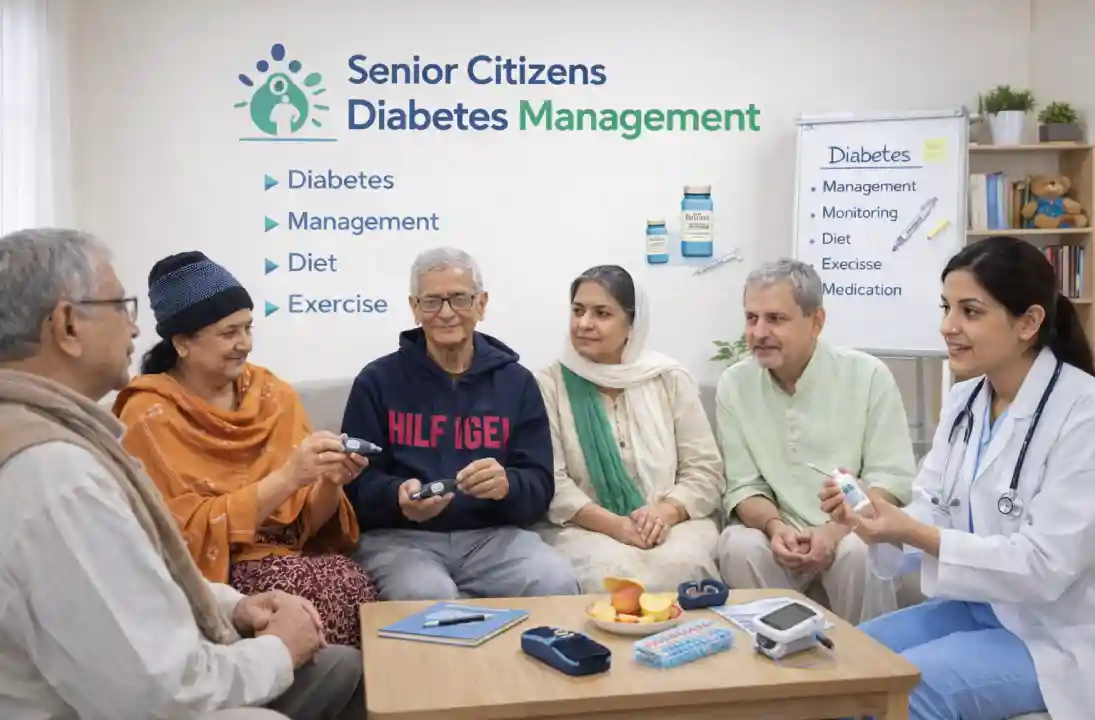
Senior Citizens Diabetes Management – 2026 Practical Guide for Families
Managing diabetes in older adults requires a different approach than in younger people. Seniors face unique challenges: multiple medications, reduced appetite, cognitive changes, and higher risk of dangerous low blood sugar (hypoglycemia). This guide provides evidence‑based, senior‑friendly strategies for diabetes management, from diet and exercise to medication safety, and explains when professional residential care may become necessary.
1. Why Diabetes Is Different in Seniors
More than 25% of Indians aged 60+ have diabetes. Yet many standard guidelines are not designed for older adults. Key differences:
- Increased risk of hypoglycemia – low blood sugar causes falls, confusion, hospitalisation. Seniors may not feel early warning signs (hypoglycemia unawareness).
- Pill burden – most seniors take 5‑10 medicines daily, increasing risks of interactions and missed doses.
- Cognitive decline – memory loss leads to forgetting insulin or eating irregularly.
- Frailty – diabetes accelerates muscle loss, increasing fall risk.
2. Setting Realistic Blood Sugar Targets (2026 Guidelines)
Treating diabetes too aggressively in frail seniors can cause more harm than good. The 2026 Endocrine Society guidelines suggest:
| Senior Health Status | HbA1c Target | Fasting Blood Glucose |
|---|---|---|
| Healthy, few chronic conditions | < 7.0% | 80‑130 mg/dL |
| Moderate complexity (multiple diseases, mild cognitive impairment) | 7.0‑7.5% | 90‑150 mg/dL |
| Very complex/frail (advanced dementia, end‑stage illness) | 7.5‑8.5% | 100‑180 mg/dL |
Goal: Avoid severe highs and lows; quality of life is as important as numbers.
3. Medication Safety – Preventing Hypoglycemia
The most dangerous complication in elderly diabetes is low blood sugar (hypoglycemia). It causes falls, confusion, and can be fatal.
- Keep a glucagon emergency kit if parent uses insulin or sulfonylureas.
- Ask the doctor for lowest effective doses.
- Never skip meals after taking diabetes medication.
4. Nutrition – Senior‑Friendly Eating Plans
No more “avoid all carbs.” Seniors need balanced nutrition to maintain muscle and energy.
Sample one‑day meal plan
- Breakfast: 2 egg omelette with spinach + 1 small multigrain roti.
- Morning snack: Handful of nuts (almonds, walnuts).
- Lunch: Small bowl of brown rice + dal + vegetable curry + curd.
- Evening snack: Apple or pear + 1 slice cheese.
- Dinner: Fish or chicken curry + green salad + 1 millet roti.
- Bedtime: Warm milk (no sugar).
5. Exercise for Seniors with Diabetes
Physical activity lowers blood sugar, improves insulin sensitivity, and prevents falls.
- Walking – 20‑30 minutes after meals (best time to lower post‑meal sugar).
- Chair exercises – leg lifts, arm curls, seated marching.
- Chair yoga or tai chi – improves balance and reduces stress.
- Resistance bands – strengthens muscles, helps glucose uptake.
Precautions: Check blood sugar before exercise. If < 100 mg/dL, eat a small snack. Always carry glucose tablets or candy.
6. Monitoring – Tips for Seniors and Families
- Use a simple glucometer with large display and one‑touch test strips.
- Keep a log – before breakfast and 2 hours after dinner.
- Continuous glucose monitors (CGM) are now available without prescription in India (e.g., Freestyle Libre). They reduce finger pricks and alert caregivers to dangerous lows.
- When to check extra: before driving, if feeling shaky or confused, during illness, after medication changes.
7. Foot Care – Preventing Amputation
Diabetes + aging = high risk of foot ulcers and amputations.
- Wash and dry feet daily (check between toes).
- Apply moisturising cream (not between toes).
- Inspect for cuts, blisters, redness, or swelling – use a mirror if needed.
- Never walk barefoot (even indoors).
- Cut toenails straight across; see a podiatrist if thick or ingrown.
- When to call doctor: Any non‑healing wound, blackened toe, sudden swelling, or fever.
8. Managing Diabetes with Dementia – Special Challenges
When a senior has both diabetes and dementia, care becomes exponentially harder. The person may forget to eat then take medication, eat twice, refuse to check blood sugar, or wander away from meals.
If your loved one has dementia and diabetes, and home management is no longer safe, please visit our dedicated memory care home in Kolkata:
👉 Old age home in Kolkata for dementia care →
9. When to Seek Professional Residential Care
- Recurrent severe hypoglycemia requiring hospitalisation.
- Inability to follow medication regimen despite reminders.
- Weight loss or malnutrition due to skipped meals or inability to prepare food.
- Multiple falls from hypoglycemia or neuropathy.
- Caregiver burnout – family members exhausted, ill, or unable to provide 24/7 oversight.
A good facility offers 24/7 nursing for insulin administration, structured meal times with diabetes‑friendly menus, glucose monitoring as part of daily routine, and a safe environment to prevent wandering and falls.
10. Frequently Asked Questions (FAQ)
Managing diabetes in seniors requires patience, consistency, and individualisation. Focus on avoiding dangerous lows, protecting mobility, and maintaining quality of life. When dementia complicates self‑care, do not hesitate to seek professional residential support. Safety always comes first.
For families who need specialised dementia care with integrated diabetes management in Kolkata, explore our memory care home:
👉 Old age home in Kolkata for dementia care →