
Stroke warning signs in seniors Understanding : The Silent Thief of Time
When it comes to the health of our seniors, few words carry as much weight as “stroke.” It happens in an instant, often without a dramatic warning, fundamentally altering lives in the span of a few heartbeats. For caregivers, adult children, and seniors themselves, recognizing the subtle whispers of a stroke before they become a roar is the difference between a full recovery and a permanent disability.
A stroke occurs when the blood supply to part of the brain is interrupted or reduced, preventing brain tissue from getting oxygen and nutrients. Within minutes, brain cells begin to die. This is why medical professionals often say, “Time is brain.”
Stroke Warning Signs in Seniors
As people grow older, health conditions often become more complex, and stroke is one of the most serious risks faced by seniors. A stroke happens when blood flow to the brain is suddenly interrupted, which can cause permanent damage if not treated quickly. Families and caregivers should understand the early signs so they can act without delay.
One of the most common indicators is sudden weakness, especially on one side of the body. Seniors may experience difficulty lifting an arm, standing properly, or maintaining balance. Changes in speech are another red flag. Slurred speech, confusion, or trouble understanding simple words should never be ignored. Sudden vision problems, such as blurred or double vision, can also signal danger.
Facial drooping is a warning sign that often appears quickly. A smile may look uneven or one side of the face may not move at all. Severe headache without any clear cause can also point to a serious problem. These symptoms may come and go, but even temporary signs require immediate medical attention.
Recognizing stroke warning signs in seniors early can save lives and reduce long-term disability. Fast action allows doctors to limit brain damage and improve recovery outcomes. Caregivers should trust their instincts and seek emergency help rather than waiting.
Understanding stroke warning signs in seniors helps families protect their loved ones and respond with confidence during a medical emergency.
The Types of Stroke: Know Your Enemy
Before diving into the warning signs, it is crucial to understand that not all strokes look or act the same. Understanding the “how” helps emphasize the “why” behind the urgency.
1. Ischemic Stroke
The most common type, accounting for about 87% of all cases. It occurs when a blood clot blocks an artery leading to the brain. In seniors, this is often the result of atherosclerosis—the buildup of fatty deposits (plaque) in the arteries.
2. Hemorrhagic Stroke
This happens when a blood vessel in the brain leaks or ruptures. High blood pressure (hypertension) is the leading culprit here. These are often more “explosive” in onset and can be triggered by physical exertion or extreme stress.
3. Transient Ischemic Attack (TIA)
Often called a “mini-stroke,” a TIA is a temporary blockage. Symptoms might last only a few minutes and then vanish completely. Do not be fooled. A TIA is a “warning stroke”—a massive red flag that a major stroke is imminent.
The Gold Standard: The B.E. F.A.S.T. Method
While medical science is complex, the early detection of a stroke has been simplified into an easy-to-remember acronym. If you notice any of these signs in a senior, call emergency services immediately.
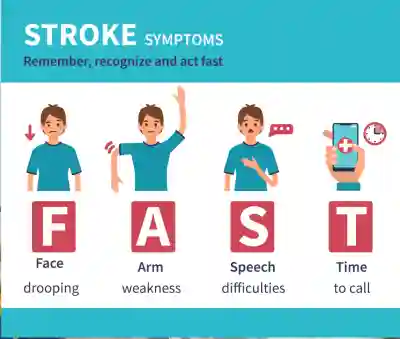
B – Balance
Is the person suddenly stumbling or losing their coordination? Seniors often have balance issues due to age or arthritis, but a sudden inability to stand straight or a feeling of “room spinning” (vertigo) is a major warning sign.
E – Eyes
Does the person have sudden blurred vision, double vision, or a total loss of sight in one or both eyes? Often, patients describe it as a “curtain falling” over their field of vision.
F – Face Drooping
Ask the person to smile. Does one side of the face droop or feel numb? An uneven smile is one of the most recognizable signs of a neurological deficit.
A – Arm Weakness
Ask the person to raise both arms. Does one arm drift downward? Or is one arm unable to rise at all? This hemiparesis (one-sided weakness) is a classic hallmark of a stroke.
S – Speech Difficulty
Is their speech slurred? Are they unable to speak, or do they seem confused by simple commands? Ask them to repeat a simple sentence like, “The sky is blue.” If they struggle, every second counts.
T – Time to Call 911
If any of these symptoms are present—even if they go away—check the clock. Note the time the symptoms started and get to a hospital immediately.
The Subtle Signs: What Seniors Often Miss
While “F.A.S.T.” covers the basics, seniors often experience “atypical” symptoms that are frequently dismissed as “just getting old” or “a bad headache.”
Sudden Confusion
If a normally sharp senior suddenly cannot remember where they are, what year it is, or struggles to follow a conversation, it isn’t necessarily dementia. Sudden-onset confusion is a neurological emergency.
The “Worst Headache of My Life”
A sudden, excruciating headache with no known cause—often described as a “thunderclap”—is a primary indicator of a hemorrhagic stroke. Unlike a migraine, which builds up, this pain is instant and overwhelming.
Numbness in the Extremities
While arm weakness is common, sudden numbness in a leg or even one side of the body (including the torso) should never be ignored.
Unexplained Dizziness or Nausea
In women and the elderly, strokes can sometimes manifest as sudden, severe nausea, hiccups, or chest pain. Because these symptoms mimic other ailments, they are often the most dangerously misdiagnosed.
Why Seniors Are at Higher Risk
Aging brings wisdom, but it also brings physiological changes that make the brain more vulnerable.
Hypertension (High Blood Pressure): The “silent killer” is the leading cause of stroke. Over time, high pressure weakens the walls of the blood vessels in the brain.
Atrial Fibrillation (AFib): Many seniors live with this irregular heart rhythm. AFib allows blood to pool in the heart, forming clots that can travel directly to the brain.
Diabetes: High blood sugar damages blood vessels over time, making clots more likely to form.
Sedentary Lifestyle: Reduced mobility in the golden years can lead to poor circulation and weight gain, both of which stress the cardiovascular system.
The Critical Window: The "Golden Hour"
In the world of stroke recovery, the “Golden Hour” refers to the first 60 minutes after the onset of symptoms.
If a senior reaches the hospital within this window, doctors can often administer tPA (tissue plasminogen activator). This “clot-busting” drug can dissolve the blockage and, in many cases, completely reverse the symptoms of an ischemic stroke.
However, tPA has a strict time limit (usually 3 to 4.5 hours from the start of symptoms). If you wait to “see if they feel better in the morning,” you may be closing the door on their best chance at a full recovery.
Prevention: Taking Control of the Future
You cannot stop the clock on aging, but you can drastically reduce the risk of a stroke through proactive management.
| Risk Factor | Action Step |
| High Blood Pressure | Reduce salt intake and monitor readings daily. |
| Cholesterol | Focus on a Mediterranean diet (healthy fats, lean protein). |
| Smoking | Quit immediately. Smoking doubles the risk of stroke. |
| Physical Activity | Even 20 minutes of walking a day improves vascular health. |
| Alcohol | Limit consumption; excess alcohol raises blood pressure. |
Life After Stroke: The Path to Recovery
If a stroke does occur, the journey doesn’t end at the hospital. Rehabilitation is a grueling but vital process.
Physical Therapy: Focuses on regaining motor skills and balance.
Occupational Therapy: Helps seniors relearn daily tasks like dressing, eating, and bathing.
Speech Therapy: Crucial for those suffering from aphasia (difficulty speaking) or dysphagia (difficulty swallowing).
Mental Health Support: Depression is incredibly common post-stroke. Seniors may feel a loss of independence, making emotional support j
Conclusion: Vigilance is the Best Medicine
A stroke doesn’t just happen to an individual; it happens to a family. By memorizing the B.E. F.A.S.T. signs and understanding the unique risks that seniors face, you become the first line of defense.
Never worry about “bothering” a doctor or “overreacting.” When it comes to a stroke, an overreaction is better than a delayed reaction. Be the advocate your loved one needs. Watch the face, listen to the speech, and never ignore the clock.
Would you like me to create a printable "Stroke Emergency Checklist" that you can keep on your refrigerator or in a caregiver's folder?
Your Stroke Emergency Checklist: Stay Prepared
When a stroke occurs, panic is the enemy and clarity is your greatest tool. This checklist is designed to be printed and kept in a highly visible location—like the refrigerator or near a senior’s bedside—so that anyone (family, neighbors, or caregivers) can act without hesitation.
1. The Immediate “B.E. F.A.S.T.” Assessment
If you suspect something is wrong, go through these steps out loud:
BALANCE: Ask them to stand or walk. Are they leaning to one side or stumbling?
EYES: Ask, “Is your vision blurry or dark in one eye?” Check if their eyes are tracking your finger normally.
FACE: Ask them to show their teeth or smile. Watch for: Does one side of the mouth stay flat?
ARMS: Ask them to close their eyes and hold both arms out straight for 10 seconds. Watch for: Does one arm “drift” downward or fail to lift?
SPEECH: Ask them to repeat: “The grass is green in the park.” Listen for: Slurring, using the wrong words, or total silence.
TIME: If any of the above are “Yes,” call 911 (or your local emergency number) immediately.
2. Critical Information for First Responders
While waiting for the ambulance, gather these four pieces of information. This will save precious minutes at the hospital:
The “Last Known Well” Time: What was the exact time you last saw the person acting normally? (This determines if they can receive life-saving clot-busting drugs).
Current Medications: Specifically, are they on blood thinners (like Warfarin, Eliquis, or Xarelto)?
Medical History: Do they have a history of high blood pressure, diabetes, or previous strokes?
Contact Info: Your name and phone number, and the name of their primary doctor.
3. What to Do (And NOT Do) While Waiting
| DO | DO NOT |
| Keep them calm: Stay with them and speak in a soothing voice. | DO NOT give them aspirin: If the stroke is hemorrhagic (bleeding), aspirin will make it worse. |
| Check the airway: If they are unconscious, roll them onto their side (recovery position). | DO NOT give them food or water: Strokes often cause swallowing issues; they could choke. |
| Loosen clothing: Undo tight collars or belts to help them breathe easily. | DO NOT drive them yourself: Paramedics can begin treatment in the ambulance; you cannot. |
| Note the symptoms: Write down exactly what you saw so you don’t forget under stress. | DO NOT let them “sleep it off”: Time is brain. Every minute lost is 1.9 million brain cells dead. |
4. Risk Management: The Daily Preventive Routine
For seniors and their families, prevention is a 24/7 commitment. Use this daily checklist to keep risk factors low:
[ ] Morning BP Check: Monitor blood pressure and log it in a notebook.
[ ] Medication Adherence: Ensure all heart and blood pressure meds are taken at the same time daily.
[ ] Hydration: Dehydration can thicken the blood; aim for 6–8 glasses of water.
[ ] Low-Sodium Meals: Keep salt intake under 1,500mg per day to protect the arteries.
🏥 Specialized Medical & Stroke Care Homes
Shibasram – Known for the best dementia care and neurological support for seniors in South Kolkata.
Finding the right old age home in Kolkata is an important decision for families who want safety, comfort, and emotional care for their elderly loved ones. A good senior care home focuses not only on medical support but also on dignity, routine, and mental well-being. Many families prefer an old age home in Kolkata that offers a calm environment, trained caregivers, nutritious meals, and personalized attention. Daily activities, social interaction, and compassionate supervision help seniors feel secure and valued. Choosing the right care home ensures peace of mind for families and a better quality of life for seniors.
M.A.(Hons) in Geography at University of Calcutta.
writing-specific social work courses such as interviewing and documentation,
professional seminars, and writing modules in all BSW and MSW