Cultural Programs in Old Age Homes – 2026 Guide to Enriching Senior Lives
Published: May 2026 | Reading time: 7 minutes
Music, dance, drama, festivals – cultural programs bring joy, stimulate memories, and create a sense of belonging. For seniors living in old age homes, well‑planned cultural activities are not mere entertainment; they are a form of therapy. Studies in 2025‑2026 confirm that regular cultural engagement reduces depression, slows cognitive decline, and improves overall quality of life.
This guide explains the benefits of cultural programs in old age homes, how to organise them safely, and what activities work best for different levels of mobility and cognition. Whether you are a family member, volunteer, or care home manager, you will find practical ideas.
If your loved one has dementia or requires 24/7 medical supervision, please see our specialised resource at the end. This guide focuses on general cultural activities suitable for most seniors.
1. Why Cultural Programs Matter in Old Age Homes
| Benefit | Explanation |
|---|---|
| Mental stimulation | Music and storytelling activate multiple brain regions, delaying cognitive decline. |
| Emotional well‑being | Familiar songs or festivals reduce anxiety and nostalgia‑based sadness. |
| Social bonding | Group activities build friendships and reduce loneliness. |
| Physical engagement | Gentle dancing, clapping, or playing simple instruments improves motor skills. |
| Sense of identity | Cultural programs connect seniors to their heritage and personal history. |
2026 insight: The World Health Organization now recognises “social prescribing” – including cultural activities – as a health intervention for older adults.
2. Types of Cultural Programs for Old Age Homes
🎵 Music & Singing
Old Bengali film songs (Uttam Kumar, Suchitra Sen era) – triggers happy memories.
Rabindra Sangeet & Nazrul Geeti – calm, meditative.
Group singing with large‑print lyric sheets.
Instrumental sessions – harmonium, tabla, or simple hand percussion (safe for arthritis).
💃 Dance & Movement
Chair‑based dance – seniors remain seated, moving arms and upper body.
Folk dance demonstrations – invite a local troupe; residents watch and clap.
Antakshari (singing game) – low‑energy, high fun.
🎭 Drama & Storytelling
Short skits based on mythological stories or social themes (avoid loud conflicts).
Storytelling sessions – residents share real life stories of their youth (reminiscence therapy).
Puppet shows – visually engaging, less demanding.
🏺 Arts & Crafts
Rangoli / Alpana using coloured powder or flower petals (themed: Durga Puja, Diwali).
Painting and pottery – fine motor skill practice.
Collage making – old magazine cutouts on freedom fighters, festivals.
🎉 Festival Celebrations
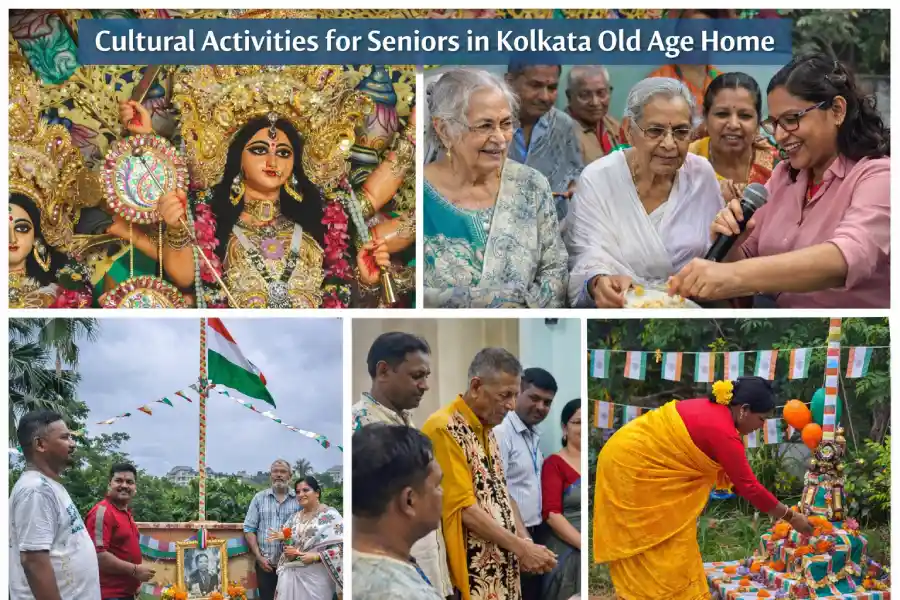
Durga Puja, Diwali, Saraswati Puja, Christmas, Eid – each with décor, special meals, and music.
Independence Day & Republic Day – flag hoisting, patriotic songs.
Birthday celebrations – monthly collective party for all residents born that month.
🧠 Therapeutic Cultural Activities for Dementia Residents
Music therapy – live or recorded familiar songs reduce agitation.
Sensory boxes – objects from festivals (diya, flower garland, small drum) to touch and name.
One‑to‑one reminiscence – showing old photographs and asking simple questions.
3. How to Organise a Safe & Inclusive Cultural Program (Checklist)
- Know your audience – Assess residents’ mobility, hearing, vision, and cognitive levels.
- Venue – Indoor hall with ample seating, wheelchair space, clear pathways, and good ventilation.
- Duration – Maximum 60 minutes for general program; 20‑30 minutes for dementia residents.
- Volume control – Avoid loudspeakers; use soft background music to prevent overstimulation.
- Hydration & breaks – Offer water before and after. For long programs, schedule a rest break.
- Staff ratio – 1 staff or volunteer per 10 residents for general; 1:3 for dementia group.
- Emergency plan – Identify exits, keep first‑aid ready, note residents taking anticoagulants (risk of injury from falls).
- Feedback – After the program, ask residents (if able) what they enjoyed. Adapt next time.
4. Involving Volunteers & Families
- Family talent – Children or grandchildren can perform a song, dance, or play an instrument.
- School / college groups – Many institutions require community service; a choir or drama troupe can visit.
- Local cultural clubs – Kolkata has numerous sangeet schools and amateur theatre groups willing to perform at old age homes for free or nominal fees.
- Intergenerational programs – Seniors teach youngsters a folk art (e.g., alpana drawing) – builds self‑worth.
How to coordinate: Contact the old age home manager at least 2‑3 weeks in advance. Inquire about resident preferences (e.g., avoid loud classical music if most prefer film songs).
5. Cultural Programs Designed for Different Ability Levels
| Ability Level | Suitable Activities | What to Avoid |
|---|---|---|
| Independent / mobile | Stand‑and‑sing, group dancing, rangoli making | Overly long sessions (beyond 1.5 hours) |
| Mild mobility (walker/cane) | Chair dancing, instrumental listening, storytelling | Floor seating, fast movement |
For residents with advanced dementia, general cultural programs may cause agitation. Specialised memory care homes (like our old age home in Kolkata for dementia care) offer trained staff and adapted activities.
6. Real‑Life Example: A Monthly “Cultural Friday” at a Kolkata Old Age Home
Setup:
First Friday of every month, 4‑5 PM (after afternoon rest).
Residents seated in semicircle.
One live singer (volunteer) with harmonium.
Lyrics projected on a wall (large font).
Simple snacks (tea and biscuits) served afterwards.
Outcome: Attendance grew from 30% to 85% over six months. Family members reported that parents “look forward to Cultural Fridays.” Agitation on Friday afternoons decreased dramatically.
7. Frequently Asked Questions (FAQ)
For general old age homes, once a week is ideal. For dementia‑specific units, shorter sessions (20‑30 minutes) 2‑3 times per week are better.
Have a quiet room available. Assign a staff member to escort the resident out gently. Do not force participation. Sometimes overstimulation is unavoidable.
Yes – video or audio recordings allow bedridden residents to enjoy later. However, obtain consent from participants.
No. Many activities (singing, storytelling, rangoli) use existing resources. Volunteers eliminate costs. A small budget for snacks and craft materials may be ₹500‑1,000 per event.
Call any old age home near you. Offer a specific proposal (e.g., “I can sing old film songs for 30 minutes on a Saturday”). Start with a short trial. Most homes welcome genuine volunteers.
A 2025 geriatric study found that regular music therapy reduced as‑needed anxiolytic (anti‑anxiety) medication use by 34% in old age homes. Meaningful activities truly act as medicine.
8. Beyond Programs – The Role of Professional Care
Cultural programs bring temporary joy, but they cannot replace consistent, compassionate daily care. If your loved one lives in an old age home that neglects basic needs (nutrition, hygiene, medical attention), no cultural activity will fix the underlying problem.
Conversely, a well‑managed old age home uses cultural programs as one part of a holistic care plan – alongside nutritious meals, safety, medical oversight, and social engagement. For families seeking such an environment, we invite you to learn more.
For specialised dementia care or residential support that includes daily meaningful activities, please visit:
Old age home in Kolkata for dementia care
For general senior living options, see our luxury retirement home for senior citizens in Kolkata guide.
🎭 Enrich a Senior’s Life Through Culture
Whether you want to volunteer, organise an event, or find a home where cultural programs are a way of life, we are here to guide you.
Get Involved or Learn More →