
Desire for Relationship Changes with Time
Recent research has shed light on why the actual holiday season doesn't often match your idealized vision — and why our expectations from relationships shift as we grow older.
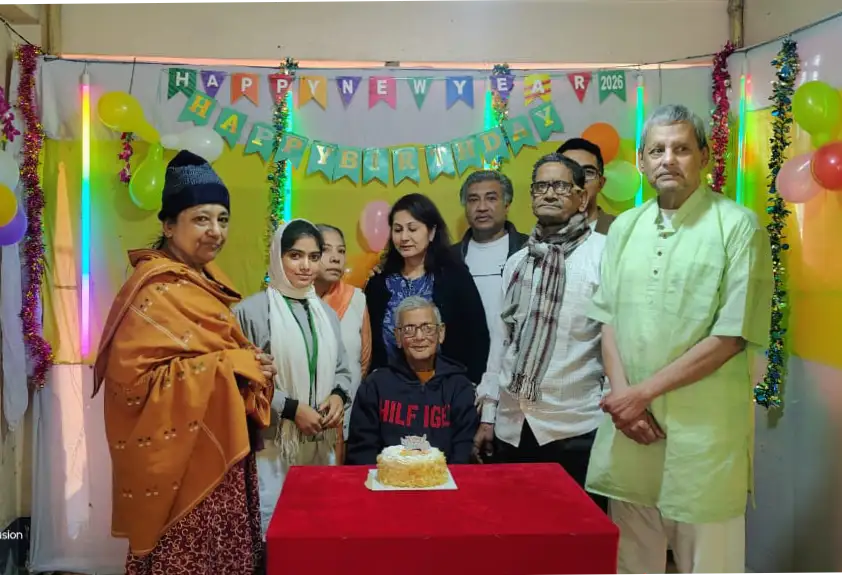
A recent study has offered an explanation for why reality sometimes differs from your idealized, happy holiday season. The study's lead author, Samia Akhter-Khan, a graduate student at King's College London, claims that loneliness stems from this. It was published in the journal Perspectives on Psychological Science.
"Loneliness results from a discrepancy between expected and actual social relationships."— Samia Akhter-Khan, King's College London
Akhter-Khan and colleagues co-authored an article on the causes of loneliness, especially in later life, and solutions with Leon Li, a PhD in psychology and neuroscience from Duke University.
"The problem that we identified in the current research was that we haven't really thought about: What do people expect from their relationships?" Akhter-Khan stated. "We work with this definition of expectations, but we don't really identify what those expectations are and how they change across cultures or over the lifespan."
We expect certain fundamentals in every partnership. Everyone wants to have individuals in their lives that they can turn to for support. We can rely on our friends in times of need. A conversation partner. Those who "get" us. Someone we can rely on. Companions that we can enjoy enjoyable encounters with.
However, according to the team's idea, known as the Social Relationship Expectations Framework, elderly adults might have some relationship expectations that have been disregarded.
The Two Overlooked Expectations
- Elderly people want to be valued — they want others to pay attention to them, be curious about their experiences, and grow from their errors.
- They desire to give back to people and their community — through teaching, mentoring, volunteering, providing care, or engaging in other worthwhile activities.
Akhter-Khan's 2018–2019 study of ageing in Myanmar gave her the first indication that the causes of loneliness might be more complicated than first appears. Since "people are so connected and live in a very close-knit society," she initially believed that most people wouldn't experience loneliness. Individuals have large families and spend a lot of time together. Why would somebody experience loneliness?
However, her studies indicated differently. "It actually turns out to be different," she replied. Even if people don't spend a lot of time alone, they can nevertheless experience loneliness. She claimed that attempts to lessen loneliness have overlooked how our expectations for relationships evolve with age. In our 30s, for example, we might not want the same social relationships as we want in our 70s.
"They're not part of the regular scales for loneliness."
Two age-specific expectations that have not been considered were found by the researchers. These expectations — being valued and giving back — are rarely captured in standard loneliness measurement tools.
According to Akhter-Khan, who worked as a graduate research assistant for a Bass Connections project at Duke in 2019–20 on how society values care in the global economy, part of the reason for the oversight may be that the labor and contributions of older people are frequently overlooked in typical economic indices.
"Ageism and negative aging stereotypes don't help," she said.
Elderly individuals are not the only ones who experience loneliness. "It is a young people's problem as well," stated Akhter-Khan. "If you look at the distribution of loneliness across the lifespan, there are two peaks, and one is in younger adulthood, and one is in old age."
World leaders started raising awareness of loneliness as a public health concern even prior to the COVID-19 pandemic. In 2018, Britain became the first nation to appoint a minister for loneliness. In 2021, Japan did the same.
Loneliness is more than just an emotion because it has an impact on health. Among other health problems, chronic loneliness has been connected to higher risks of heart disease, stroke, dementia, and Alzheimer's disease. Some researches claim that the dangers are comparable to or even higher than those associated with obesity and smoking. According to the experts, we might be able to treat loneliness more successfully if we have a deeper understanding of its causes.
When Loneliness Meets Memory Loss
Chronic loneliness is a known risk factor for cognitive decline. If your loved one is living with Alzheimer's or dementia, structured companionship and professional care can make a meaningful difference. Shibasram specializes in Alzheimer's and dementia care — providing 24/7 nursing, social engagement, and a compassionate home-like environment in Kolkata.
Explore Shibasram Trust