Old Age Homes on EM Bypass, Kolkata: How Families Should Actually Decide
A family from Kasba once described their search this way. "We drove the entire Bypass in one afternoon. Ruby, Anandapur, Mouchak, New Town. Every place looked reasonable. Every brochure had the same words — caring staff, homely food, medical support. By evening, we were more confused than when we started."
This is the problem with the EM Bypass corridor specifically. There are so many options — budget homes, mid-range facilities, luxury retirement communities — that the sheer variety paralyses decision-making. And most families end up choosing based on proximity or price, not on the questions that actually matter.
This guide is not a directory. It is a filter — a way to eliminate options quickly so you can focus your time on the two or three that genuinely fit your parent.
Why the Bypass Corridor Feels Overwhelming
The EM Bypass has become Kolkata's senior care belt for three practical reasons. First, major hospitals — Ruby General, Peerless, AMRI, and NH RTIICS — are all along or near the corridor. Second, the road connects South Kolkata, Salt Lake, and New Town, so families from multiple areas can reach it easily. Third, developers have built retirement communities along the Bypass because land was available and demand was rising.
The result: more than a dozen facilities within a 10-kilometre stretch. Some are charitable trusts charging ₹12,000 a month. Others are luxury apartments at ₹90,000. Both call themselves "old age homes." Comparing them directly is almost meaningless.
Filter One: What Does Your Parent Actually Need?
Before visiting a single facility, be honest about your parent's current condition. This is not about what you hope they need. It is about what they genuinely require today.
- Can they bathe, dress, and eat without help?
- Do they remember medicines on their own?
- Have they wandered outside the house in the past six months?
- Have they fallen more than once this year?
- Do they have a chronic condition that needs regular monitoring — diabetes, cardiac issues, COPD?
If the answers suggest independent living, a budget home near Anandapur or Mouchak is entirely reasonable. If they need daily help with bathing and dressing, you need moderate care. If they wander, have severe memory loss, or require round-the-clock nursing, only a specialised facility will do.
This single filter eliminates about 60% of the Bypass options immediately — which is the point.
Filter Two: How Many Staff Are Awake at Night?
This question separates genuine care from simple accommodation. On the Bypass, many facilities look impressive during daytime tours but thin out dramatically at night.
Ask directly: "How many caregivers are physically awake on site at 2 AM?"
Falls, choking, strokes, and night wandering all happen between 10 PM and 6 AM. If the answer is "one attendant who checks periodically," your parent is not being supervised. A reliable facility will give you a specific number and explain what those staff members do throughout the night.
Filter Three: What Happens in the First Ten Minutes of an Emergency?
The Bypass is well-positioned for emergencies. But proximity to a hospital means nothing if the facility does not have a protocol.
Ask them to walk you through a specific scenario: "My father falls at 3 AM and is bleeding. What happens next?"
A good facility answers clearly — who is called, how the ambulance is arranged, which hospital they transfer to (Ruby, Peerless, or AMRI), who accompanies the resident, and how the family is informed. A weak facility responds with vague assurance. The gap in a real emergency is enormous.
What's Actually Available Along the Bypass
Senior care options on the Bypass fall into four broad categories. Matching your parent's need to the right category is the entire decision.
| Type of Facility | Best Suited For | What to Expect |
|---|---|---|
| Budget residential homes | Independent seniors who need company and meals | Basic rooms, daytime help, shared spaces. Rarely night nursing. |
| Moderate care homes | Seniors needing help with bathing, dressing, or medication | Trained attendants, visiting doctors, structured routines. |
| Nursing-style facilities | Chronic illness, post-surgery, bedridden care | 24/7 nursing, physiotherapy, emergency response systems. |
| Specialised dementia care | Memory loss, wandering, aggression, advanced Alzheimer's | Secure exits, memory-trained staff, behavioural support. |
The Bypass corridor has plenty of options in the first three categories. The fourth — specialised dementia care — is where most families struggle to find a fit. Very few facilities along the Bypass are genuinely built for advanced memory loss.
When Proximity Stops Mattering
Families often prioritise location — "we want something on the Bypass so we can visit easily." That is a reasonable starting point. But it can lead to the wrong decision.
If your parent is independent, proximity matters. If your parent is in moderate care, proximity matters somewhat. But if your parent has dementia with wandering, aggression, or advanced medical needs, proximity should be the last priority.
A facility 20 minutes away that provides genuine memory care is far safer than a facility 5 minutes away that does not. The families who learn this lesson usually learn it after a fall or a wandering incident — not before.
Where Shibasram Fits In
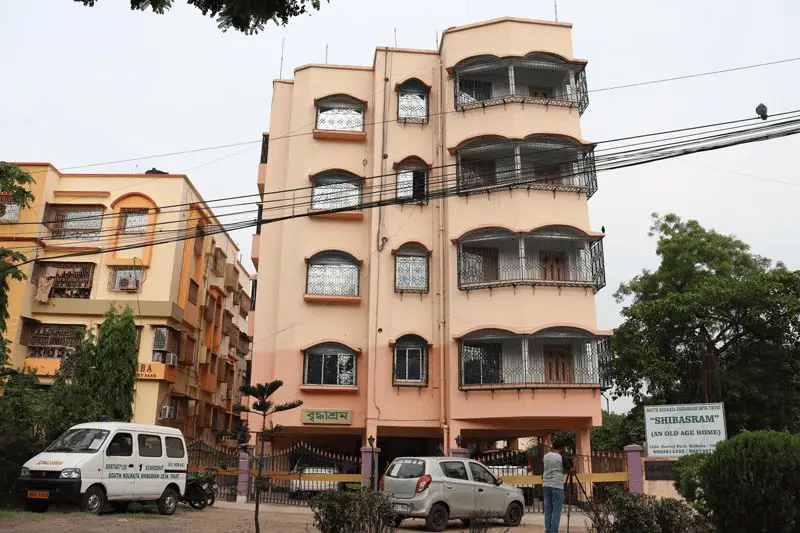
Shibasram is one of the established senior care providers serving Kolkata families, and it is conveniently reachable from the EM Bypass corridor — from Anandapur, Ruby, Kasba, and the southern stretches. For families looking at the fourth category — genuine dementia care and 24/7 medical support — it is one of the few options that fits.
What makes it relevant for families reaching this stage of care:
- 24/7 registered nursing with awake night staff
- A specialised dementia unit with secured exits and behavioural support
- Physiotherapy, customised diets, and daily cognitive activities
- Emergency arrangements including oxygen, ambulance tie-up, and hospital coordination
- Transparent pricing with written agreements
For families whose parent is still independent, a budget or moderate home along the Bypass may be entirely sufficient. But for those dealing with dementia, advanced medical needs, or night-time safety concerns, Shibasram's dementia and medical care facility is worth visiting before finalising any decision.
A Simple Checklist Before You Sign
Use this whether you are evaluating a facility on the Bypass or anywhere else in Kolkata.
- Visit unannounced on a weekday afternoon — not during a scheduled tour.
- Ask about staff-to-resident ratio during the day and at night. Get specific numbers.
- Walk through the bathrooms. Look for grab bars, non-slip flooring, and cleanliness.
- Ask for the emergency protocol in writing. Not just an assurance.
- Speak to a current resident's family. Their experience is more honest than any brochure.
- Read the admission agreement carefully. Confirm deposit refund terms, notice period, and every extra charge.
- Ask whether the facility can handle your parent's care as it changes — or whether you will need to move them again.
Final Thoughts
The EM Bypass corridor offers more choice than any other part of Kolkata. That is genuinely useful — but only if you filter properly. Start with the level of care your parent needs, not with the facility's location or price. Ask the questions most families never think to ask. And trust what you see on an unannounced visit, not what you are shown on a tour.
The right facility is not the one closest to your home. It is the one that will still be right for your parent six months from now, when their needs have changed. Choose for that version of your parent, not the current one.