7 Guidelines for Dental Health in Seniors – 2026 Complete Guide
Published: May 2026 | Reading time: 6 minutes
Good oral health is not just about a bright smile – it is essential for eating, speaking, and overall health. For seniors, poor dental hygiene is linked to pneumonia, heart disease, diabetes complications, and even cognitive decline. Yet many older adults neglect their teeth and gums due to mobility issues, dry mouth, or lack of awareness. This guide provides 7 practical guidelines for maintaining dental health in seniors – at home or with professional help.
This is a general health guide. If your loved one has dementia or Alzheimer’s and requires specialised memory care, please see our dedicated resource at the end.
1. Brush Twice Daily – Even with Dentures
Seniors with natural teeth should use a soft‑bristled toothbrush and fluoride toothpaste. For those with dentures, brushing is equally important.
How to do it right: Brush for 2 minutes, twice a day (morning and night). Use a powered toothbrush if arthritis makes gripping difficult. If the senior has dementia, stand behind them and guide their hand. For dentures: brush with a soft denture brush and mild soap (not toothpaste, which is abrasive).
Why it matters: Plaque buildup leads to gum disease, which increases inflammation throughout the body – worsening heart disease and diabetes.
2. Floss or Use Interdental Brushes Once Daily
Brushing alone misses 40% of tooth surfaces. Flossing removes food and plaque between teeth.
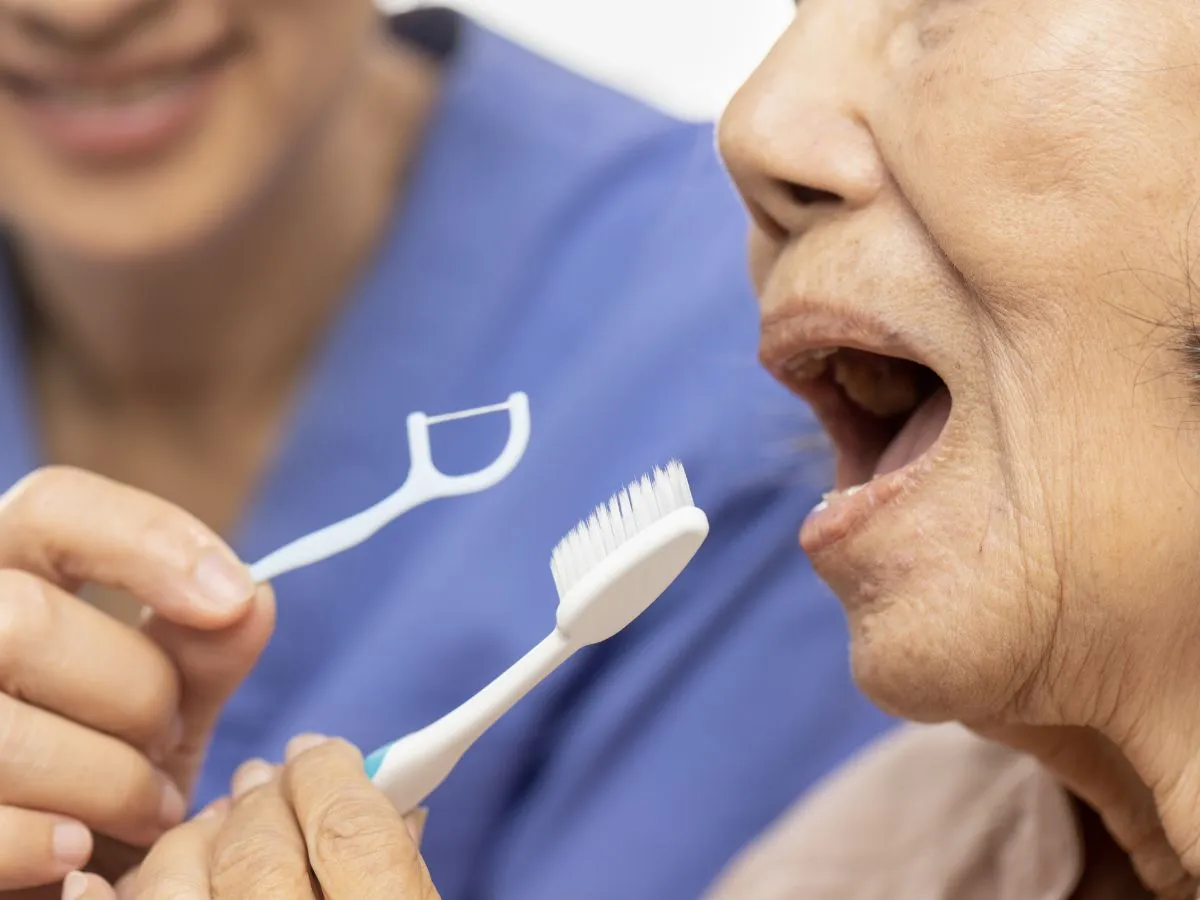
Adaptations for seniors: Use floss picks – easier to hold than traditional floss. Try interdental brushes (small conical brushes) – very effective for wide gaps. If dexterity is severely limited, ask a caregiver or family member to help. If the senior refuses flossing: a water flosser (oral irrigator) is a gentle alternative, though not quite as effective.
3. Keep Dentures Clean and Well‑Fitted
Poorly fitting dentures cause painful sores, difficulty eating, and even choking. Dirty dentures harbour bacteria that can cause pneumonia if aspirated.
Daily denture care: Remove dentures at night – gums need rest. Soak in a denture cleaning solution overnight. Rinse thoroughly before reinserting. Brush gums and tongue with a soft brush before placing dentures.
When to see a dentist: If dentures click, slip, or cause sore spots – do not use adhesives as a long‑term fix. Realignment or new dentures may be needed.
4. Manage Dry Mouth (Xerostomia)
Dry mouth is common in seniors due to medications (blood pressure, antihistamines, antidepressants) or radiation therapy. Saliva protects teeth from decay; without it, cavities and gum disease progress rapidly.
Solutions: Sip water frequently – keep a water bottle nearby. Use alcohol‑free mouthwash – alcohol worsens dryness. Saliva substitutes or moisturising sprays (available over‑the‑counter). Suck on sugar‑free candy or chew xylitol gum to stimulate saliva. Talk to the doctor – perhaps the medication causing dry mouth can be changed.
5. Look for Signs of Oral Cancer – Screen Regularly
Oral cancer is more common in older adults, especially those with a history of smoking or alcohol use. Early detection saves lives.
What to look for every month (in a mirror): Red or white patches on the gums, tongue, or cheeks. A sore that does not heal within two weeks. Lumps or thickening of the cheek. Numbness or pain in the mouth. Difficulty chewing or moving the tongue.
Action: If any sign persists, see a dentist or oral surgeon immediately. Many government dental colleges in Kolkata offer low‑cost screening.
6. Maintain Regular Dental Visits – At Least Once a Year
Seniors often skip dental checkups due to mobility issues or fear of cost. But professional cleaning and examination catch problems early.
What a dental visit includes: Professional cleaning (scaling) to remove tartar – prevents gum disease. Check for cavities, loose teeth, and denture fit. Oral cancer screening. Advice on home care adaptations.
For homebound seniors: Ask if the dentist makes house calls – some in Kolkata do. Alternatively, a family member can bring X‑rays taken at a lab to a dental consultation. Cost (Kolkata 2026): ₹500‑2,000 for a checkup and cleaning; heavily subsidised at government dental colleges.
7. Adapt Oral Care for Dementia Patients – Special Considerations
Seniors with Alzheimer’s or other dementias often forget to brush, resist help, or become agitated during oral care. Yet they are at high risk for dental disease because they may swallow food without chewing, or eat sticky sweets.
Strategies: Break tasks into small steps: “Hold your toothbrush. Now put paste on it. Now brush the front teeth…” Use a mirror – show them what to do; they may imitate. Try a three‑sided toothbrush – cleans all surfaces at once, faster. Play their favourite music during brushing to reduce agitation. Use a finger brush (soft silicone) if they clamp down on a regular brush.
If all else fails: A professional mobile dental service can clean teeth while the patient is sedated (very rare and only in severe cases). The goal is to prevent pain and infection, which worsen confusion and behaviour.
For seniors with advanced dementia who require 24/7 residential memory care, daily oral hygiene is provided by trained staff. Learn more about our specialised facility:
👉 Old age home in Kolkata for dementia care
Frequently Asked Questions (FAQ) – Senior Dental Health
At least once a year. The dentist checks for oral cancer, gum disease, and denture fit.
Not directly, but gum disease increases chronic inflammation, which is a risk factor for cognitive decline. Treating gum disease may slow dementia progression.
Fluoride toothpaste is still recommended. For dry mouth, use toothpaste with added moisturising agents (e.g., Biotene).
Try a soft, flavoured toothpaste (e.g., bubblegum – less medicinal taste). Use a song or countdown. Never force – stop and try again later.
Yes, and often better because they do the work. Choose one with a pressure sensor and a large, easy‑grip handle.
Red, swollen, or bleeding gums; loose teeth; bad breath; gums pulling away from teeth. See a dentist promptly.
No – health insurance rarely covers routine dental. Exceptions: dental care due to hospitalisation (e.g., fracture from fall). Government dental colleges offer low‑cost services.
Final Advice – Small Habits, Big Impact
Healthy teeth and gums allow seniors to eat nutritious food, smile confidently, and avoid painful infections. These 7 guidelines – brushing, flossing, denture care, managing dry mouth, cancer screening, regular checkups, and adapting for dementia – are achievable with family support. Start with one change this week.
For families who need specialised dementia care or 24/7 residential memory support in Kolkata, we invite you to explore our facility:
👉 Old age home in Kolkata for dementia care
🦷 Support Your Loved One’s Dental Health and Overall Well‑Being
If home care becomes challenging, we offer compassionate residential memory care – including daily oral hygiene support.
Contact Shibasram Trust →